
What Does Success Actually Mean in Your Career?
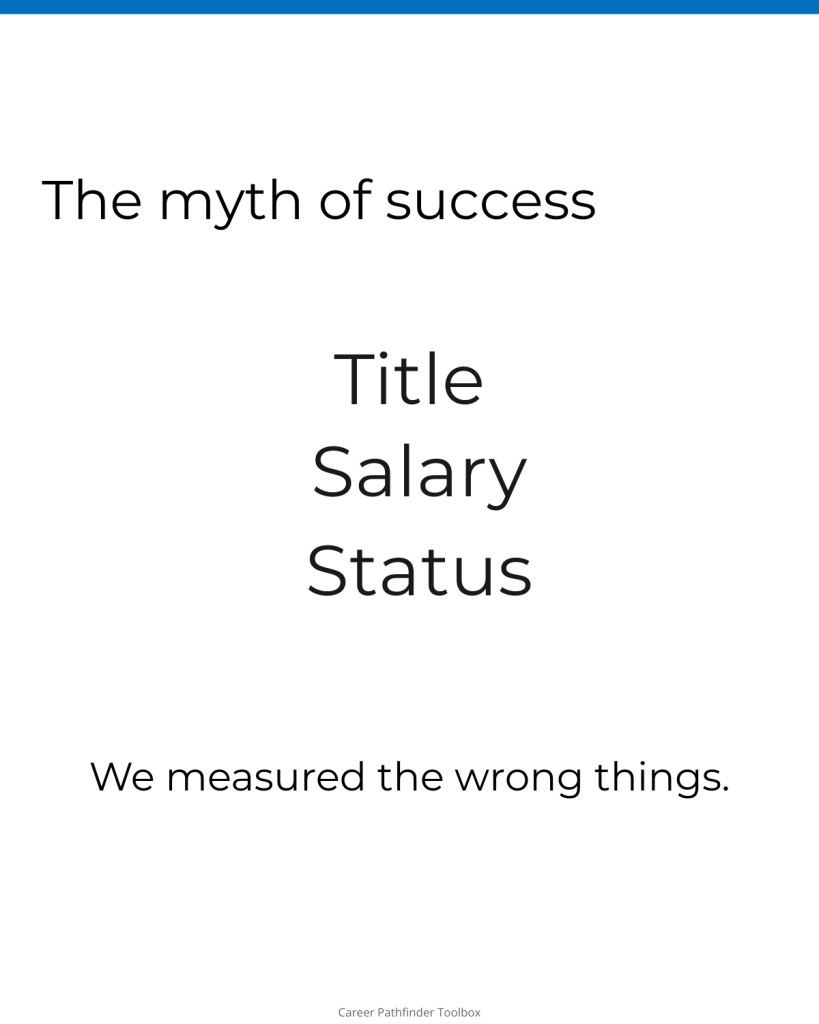
Most professionals are taught a version of success long before they ever question it.
- Status.
- Salary
- Promotion.
- Recognition.
And for a while, that definition works.
Until it doesn’t.
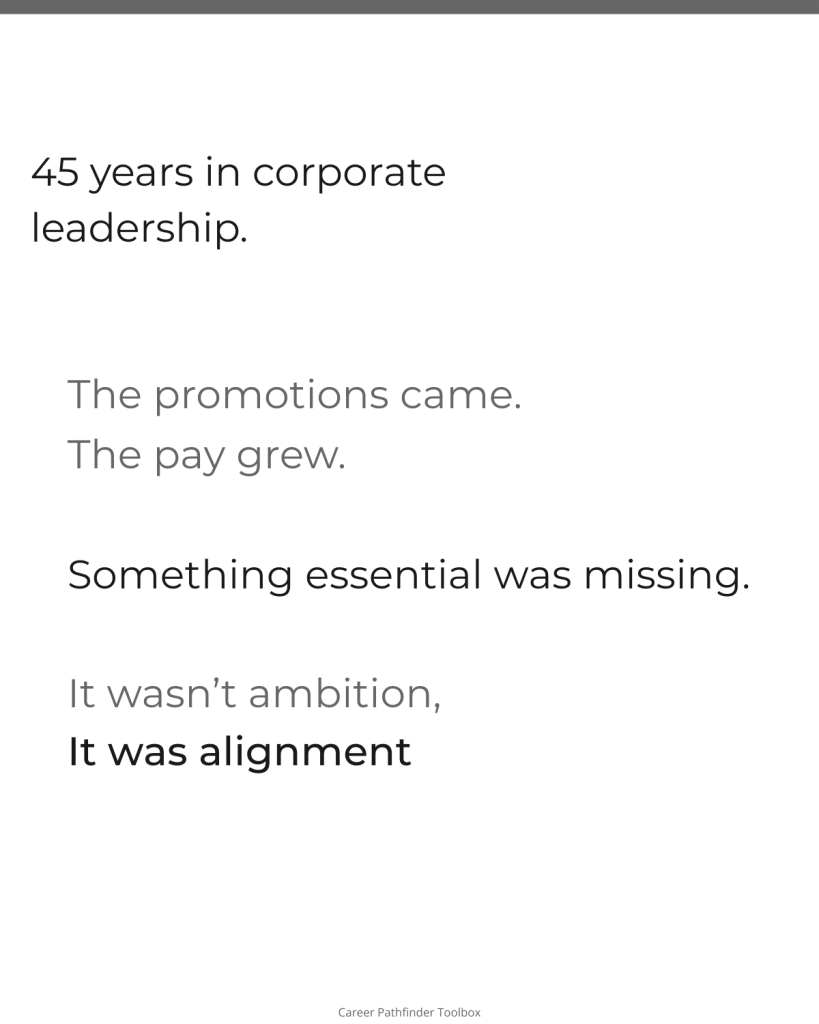
At some point, many capable, high-performing people begin to feel something difficult to name. Not failure. Not dissatisfaction exactly. But a quiet misalignment.
A sense that what looks successful no longer feels fulfilling.
So the real question becomes:
What does success actually mean to you?
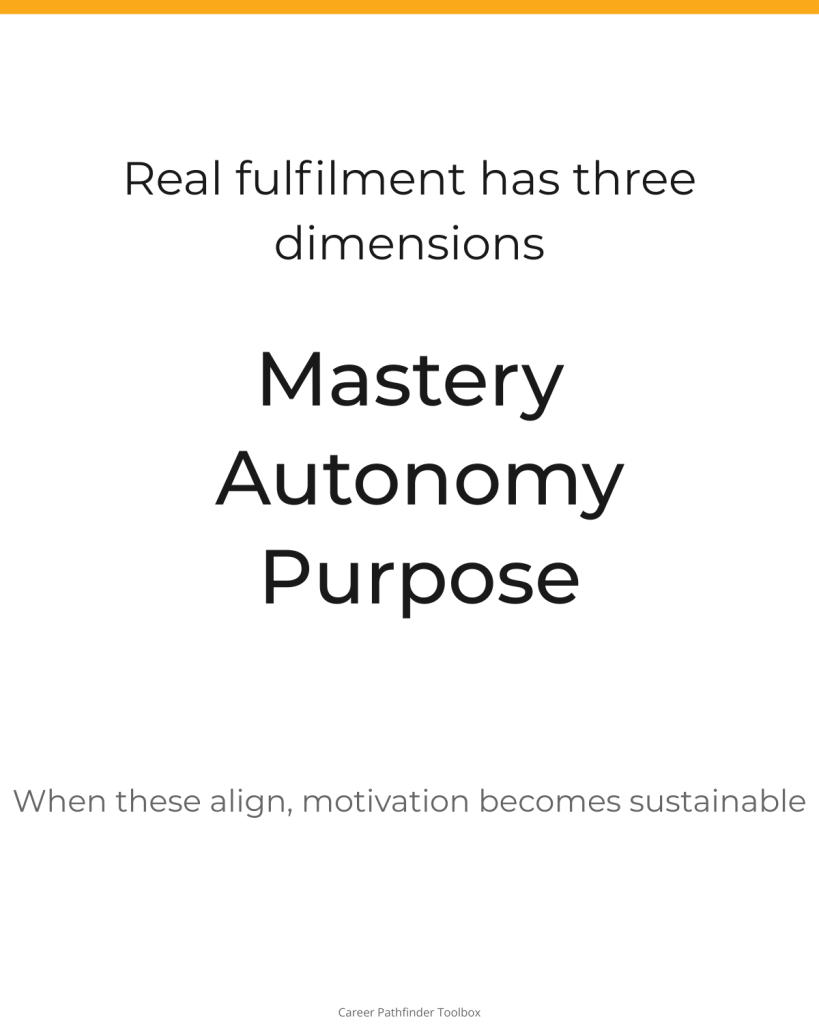
Real Fulfillment Has Three Dimensions
Decades of psychological research suggest that sustainable motivation does not come primarily from external rewards.
According to Self-Determination Theory, developed by psychologists Edward Deci and Richard Ryan, human motivation is strongest and most durable when three core psychological needs are met:
Mastery (Competence)
The opportunity to grow, improve and feel effective.
Autonomy
Meaningful control over your decisions and direction.
Purpose (Relatedness)
A sense that your work connects to something beyond yourself.
When these three are supported, motivation becomes internally driven.
When they are blocked, even high-status roles can feel draining.
This framework has been tested across education, healthcare, sport and organisational settings, consistently showing that autonomy, competence and relatedness are strongly associated with well-being and sustained performance (Deci & Ryan, 2000; Ryan & Deci, 2017).
Remove one dimension, and friction begins.
Remove two, and burnout often follows.
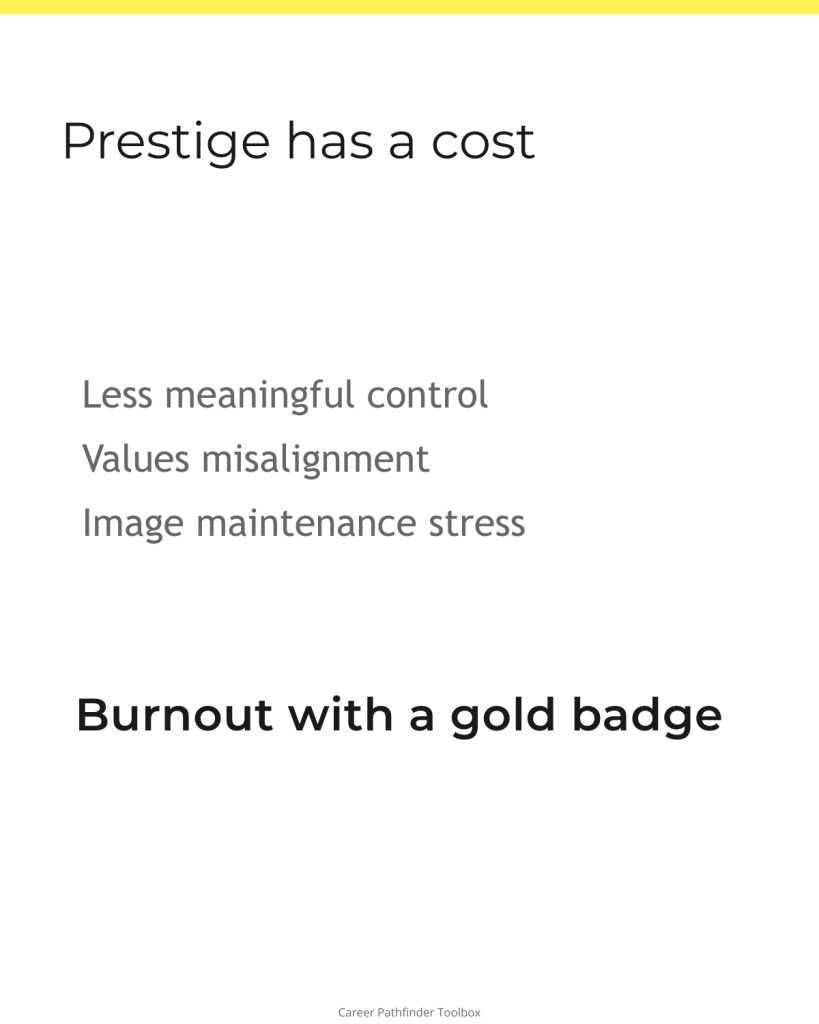
The Hidden Cost of Prestige
Prestige carries power.
- It signals achievement.
- It creates validation.
- It satisfies external metrics.
But prestige can sometimes undermine the very foundations of sustainable motivation.
Common trade-offs include:
-
Less meaningful control
-
Values misalignment
-
Constant image maintenance
-
Performance pressure without intrinsic engagement
Externally, it may look impressive.
Internally, it may feel exhausting.
Burnout with a gold badge.
The issue is not ambition.
It is misalignment between external success and internal psychological needs.
What If Real Success Reflected Who You Actually Are?
Rather than asking:
“How can I climb further?”
A more powerful question may be:
“How can my work reflect my strengths, values and natural motivations?”
That shift changes everything.
It moves success from comparison to coherence.
And coherence compounds.
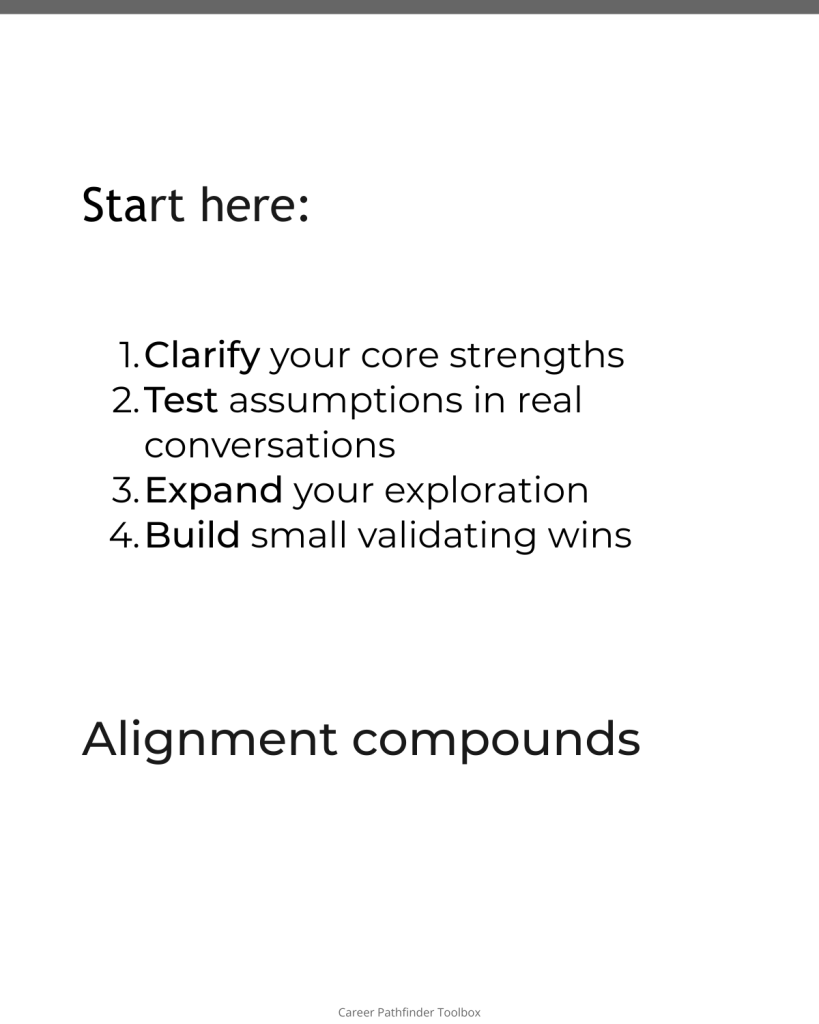
Where to Start
Realignment does not require dramatic career upheaval. It usually begins with clarity and small experiments.
A practical sequence:
1. Clarify your core strengths
Understand where you create energy rather than merely expend it.
2. Test assumptions through real conversations
Reality often differs from the stories we tell ourselves about roles and industries.
3. Expand your exploration
Look beyond obvious next steps. Lateral thinking reveals options vertical thinking cannot.
4. Build small validating wins
Tiny evidence-based moves build confidence and reduce risk.
Alignment compounds over time.
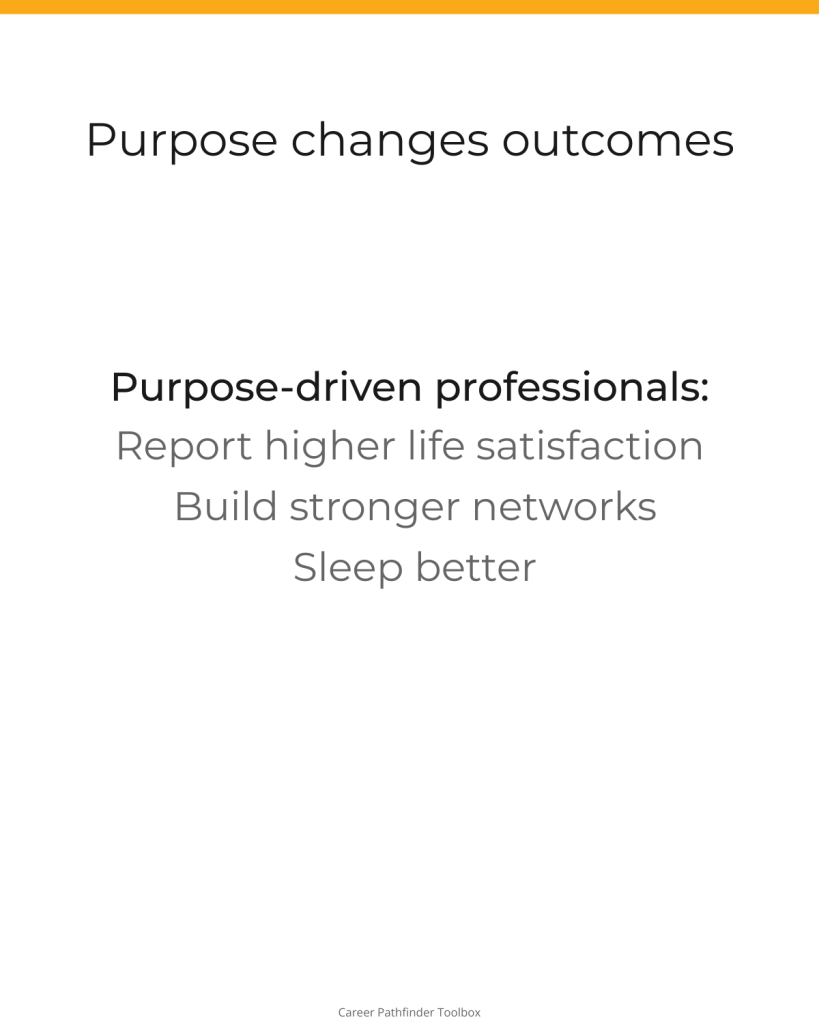
Purpose Changes Outcomes
Research in organisational psychology increasingly shows that professionals who experience purpose in their work report:
-
Higher life satisfaction
-
Greater resilience
-
Stronger relational networks
-
More sustainable engagement
Purpose does not eliminate difficulty, it changes how difficulty is experienced.
When effort aligns with internal values, challenge feels meaningful rather than depleting.
A Different Definition of Success
So the question remains:
What does success actually mean to you?
- Not what it should mean.
- Not what it once meant.
- Not what it means for someone else.
But what would genuinely fulfil you now?
Clarity here changes decisions.
Decisions change direction.
Direction changes outcomes.
If you are rethinking what success means in your career, structured reflection can make the process both deeper and less overwhelming.
The Career Pathfinder Toolbox is designed to support that kind of exploration — combining clarity exercises, real-world testing, and strategic decision frameworks.
Because sustainable success is rarely accidental.
It is usually aligned.
View the original LinkedIn carousel:


References
Deci, E. L., & Ryan, R. M. (2000). The “what” and “why” of goal pursuits: Human needs and the self-determination of behaviour. Psychological Inquiry, 11(4), 227–268.
Ryan, R. M., & Deci, E. L. (2017). Self-Determination Theory: Basic psychological needs in motivation, development, and wellness. Guilford Press.