Expanded Profile

Expanded profile

Unlock your Expanded Profile

Understand who you are — so you can choose a career that truly fits.

The Expanded Profile pillar is the heart of the Career Pathfinder Toolbox. These exercises help you understand your strengths, values, personality, motivations and purpose — the building blocks of any meaningful career decision. By reflecting deeply and honestly on who you are today, and the experiences that shaped you, you create the foundation for identifying future roles, opportunities and directions that align with your identity and aspirations.

Why this matters:
A successful career transition is not simply about finding new job titles; it’s about matching your inner world — what drives you, energises you and fulfils you — with an external path that supports and amplifies those qualities. The Expanded Profile gives you a clear, research-backed understanding of yourself, supported by AI insights and structured self-reflection.

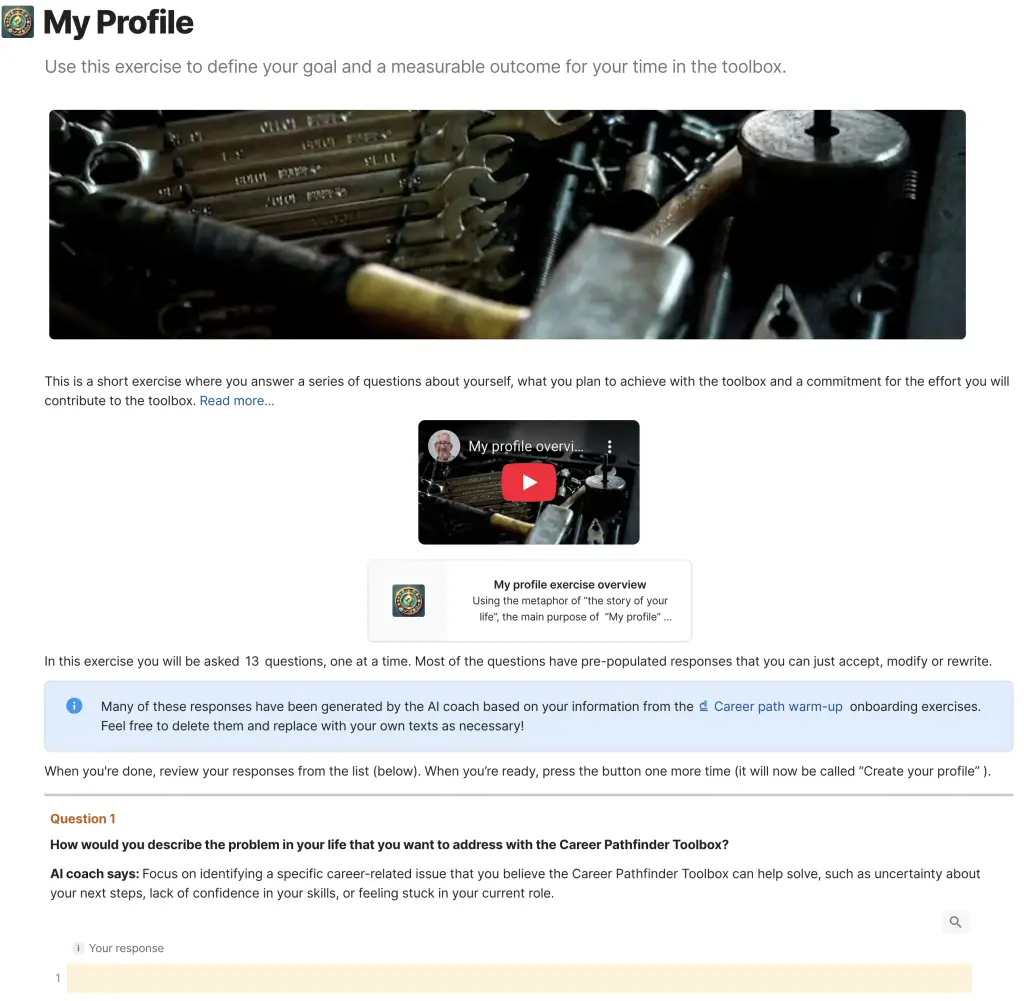
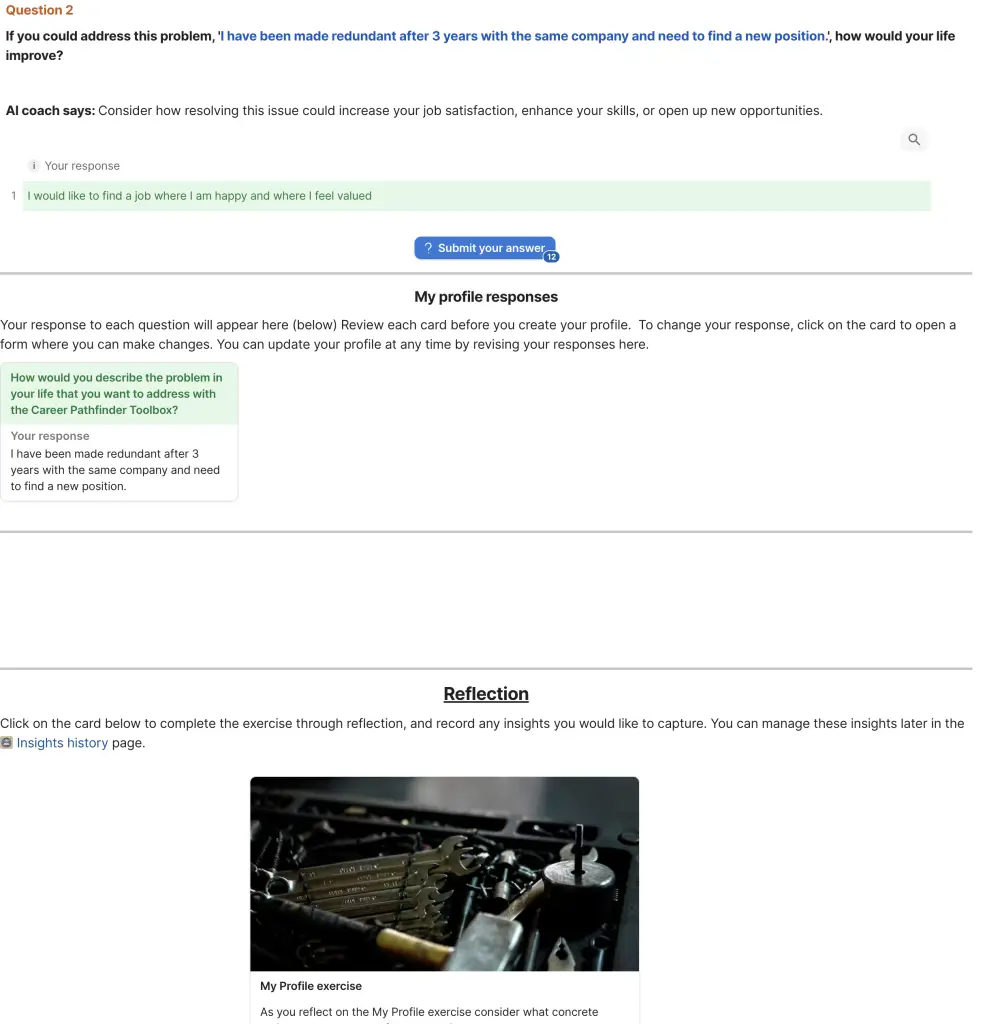
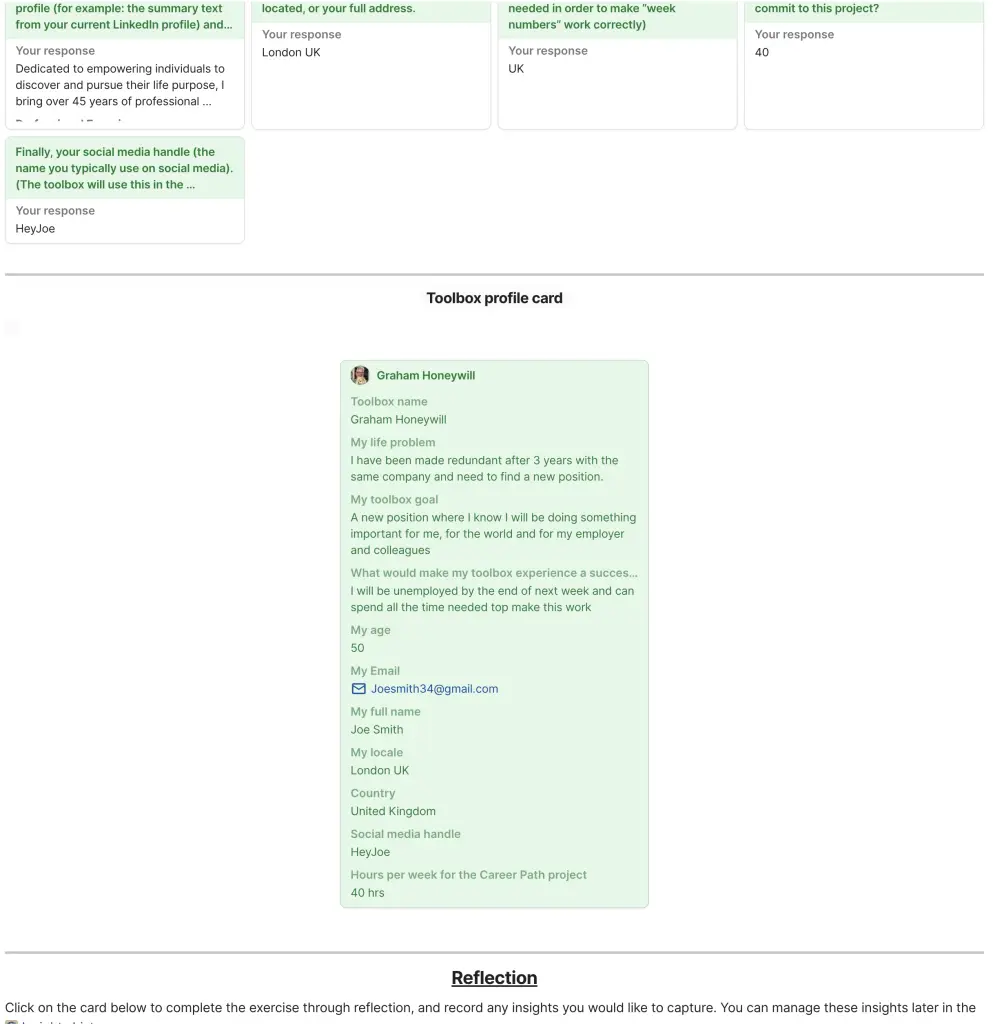
My Profile

Setting up your profile is your first task in the Career Pathfinder Toolbox. It is a critical step for you, and also for me!

For you, your profile guides you through the process of establishing a goal/objective and measurement for your journey through the toolbox exercises.
By establishing a concrete outcome, in the form of a measurable objective, you can monitor progress as you work through the exercises. This makes it significantly easier to you to achieve that outcome.

For me, it allows me to evaluate the effectiveness of the exercises and the toolbox overall so I can learn and develop the exercises and scenarios further.
This exercise contains 13 questions that will lead you to create your profile, including your goal for the time you spend with the Career Pathfinder toolbox, and a commitment to set up a ritual for your use of the toolbox to achieve that goal.

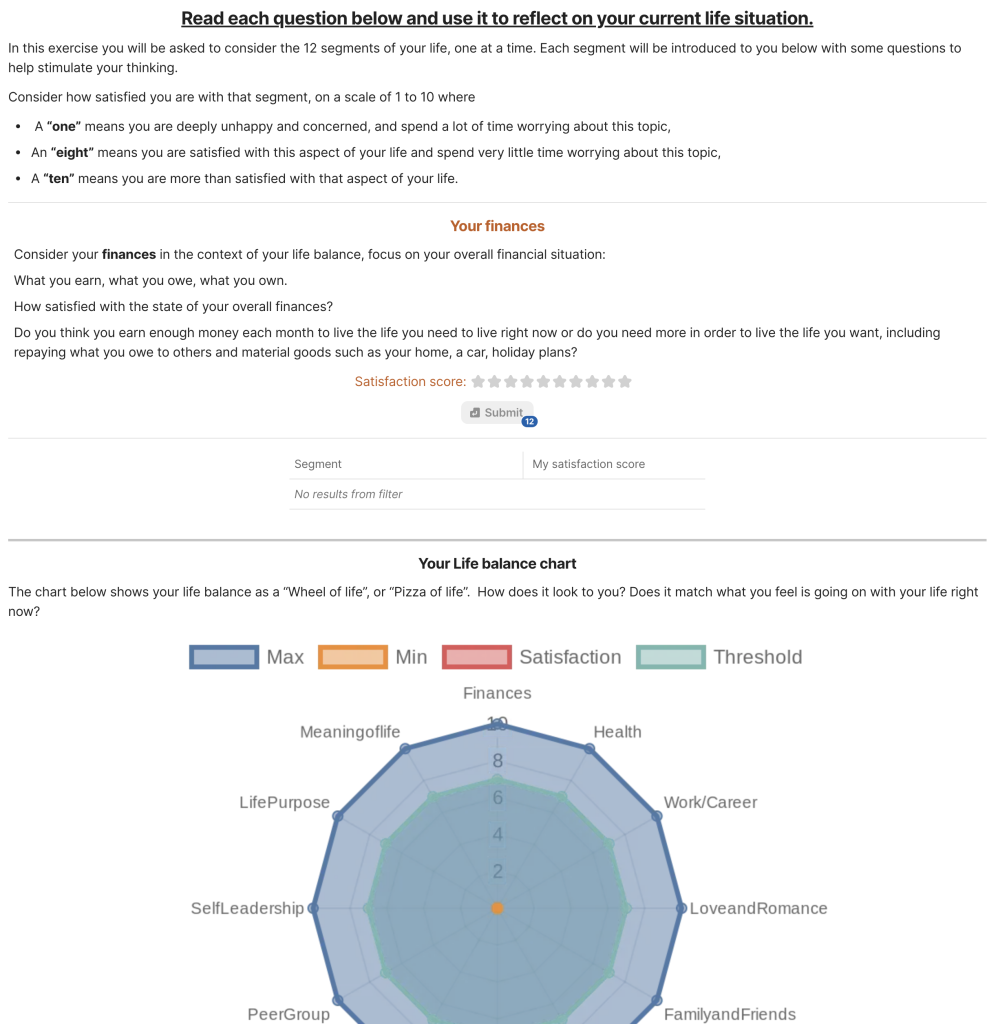
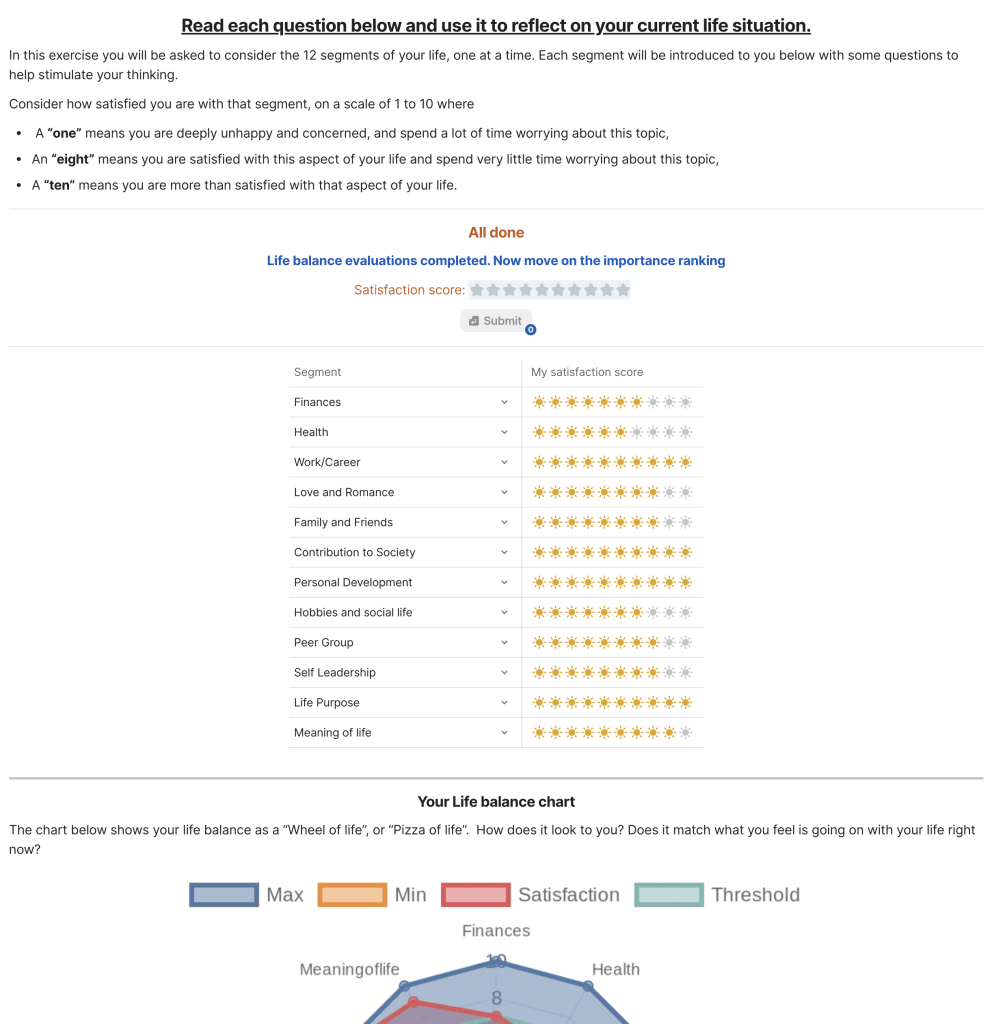
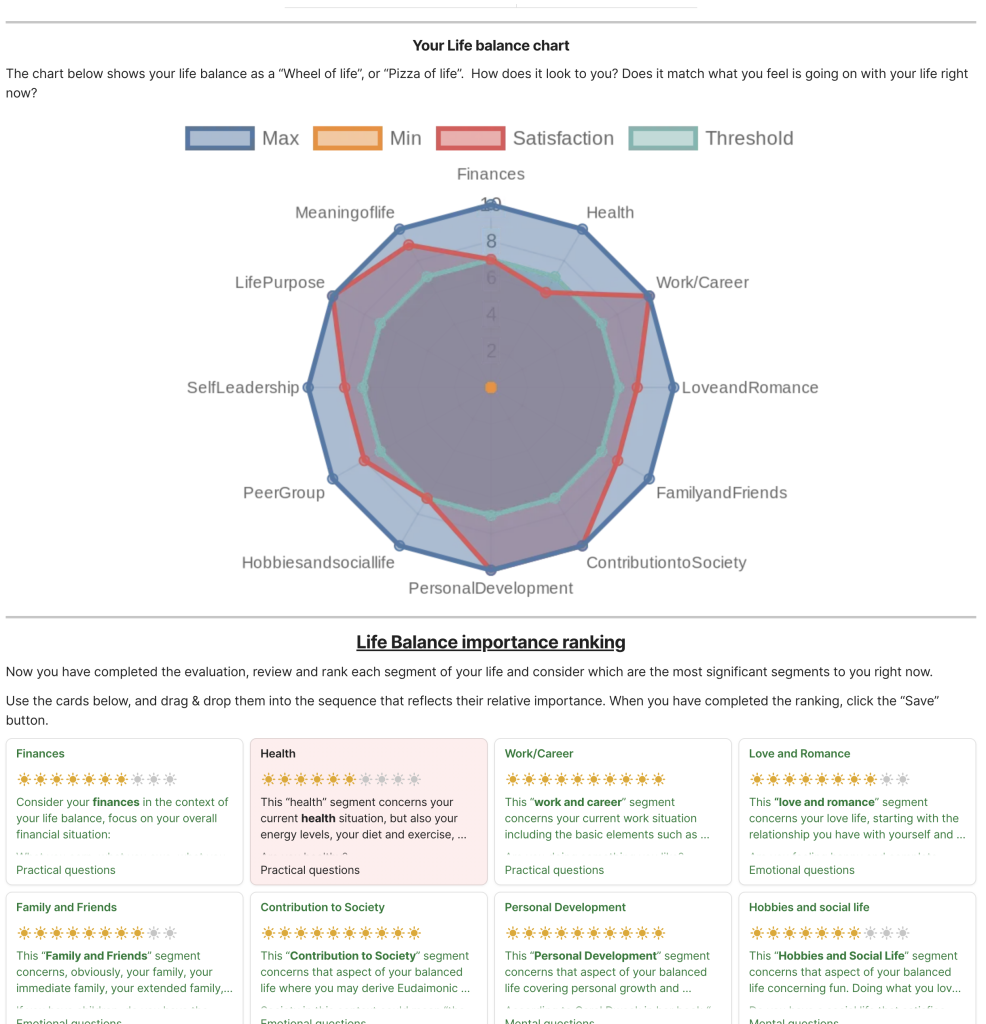
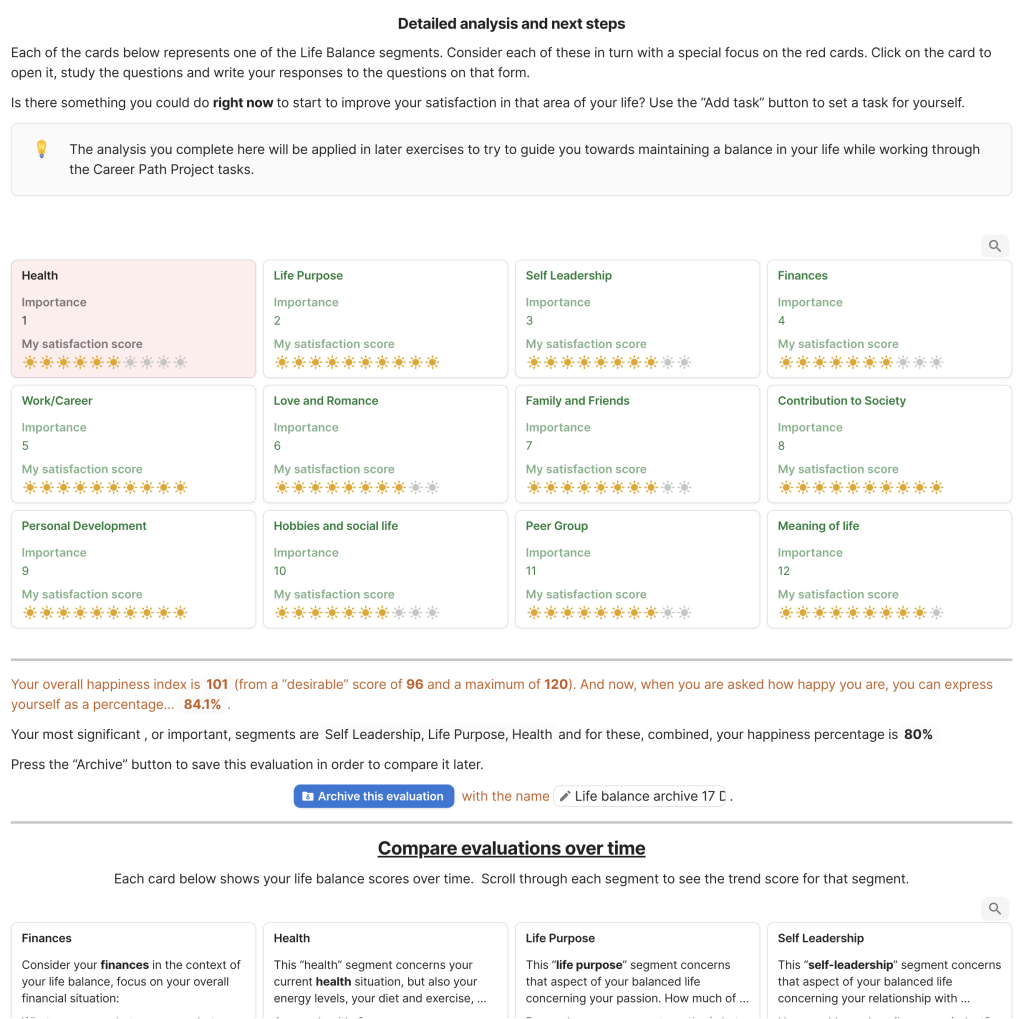
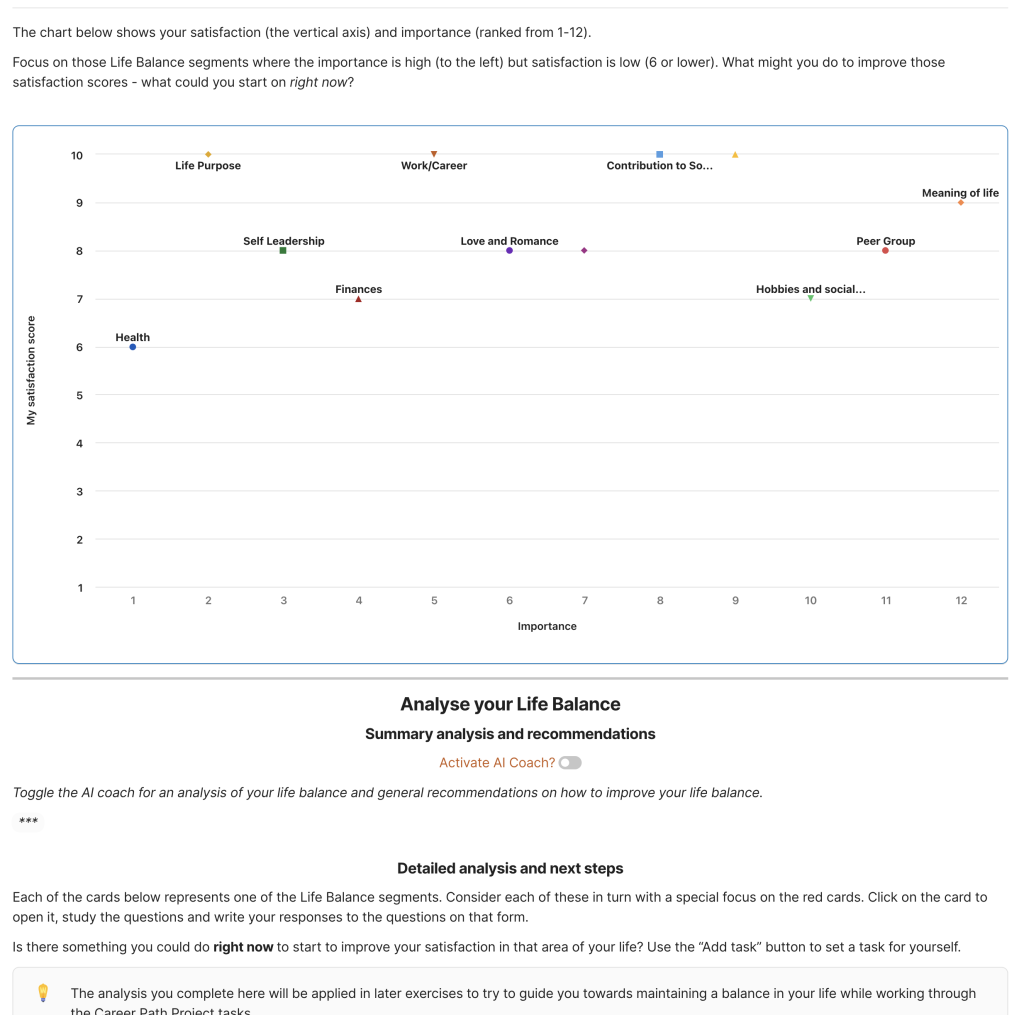
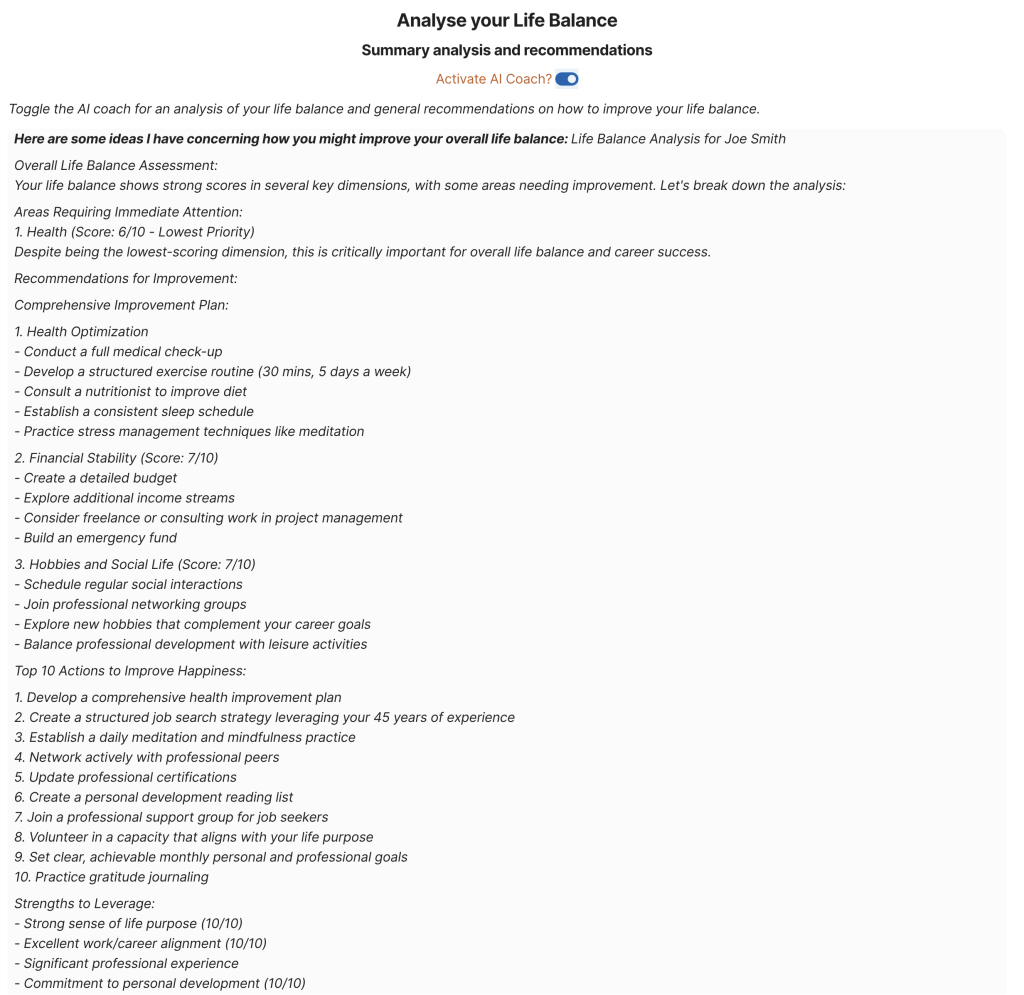
The Life Balance exercise is a critical exercise to help you create a holistic view of your life covering all aspects of the 4 main life areas: Practical; Emotional; Mental; Spiritual and to use this as the basis for self-coaching to improve your life.
The majority of people see their life from the perspective of just one or two aspects – (for example “my life sucks because I hate my boss”, or “I never have enough time to pursue my model train building hobby”).
The Life Balance stepping exercise allows you to see the “big picture” of your life as an alternate view to that you which might otherwise have.

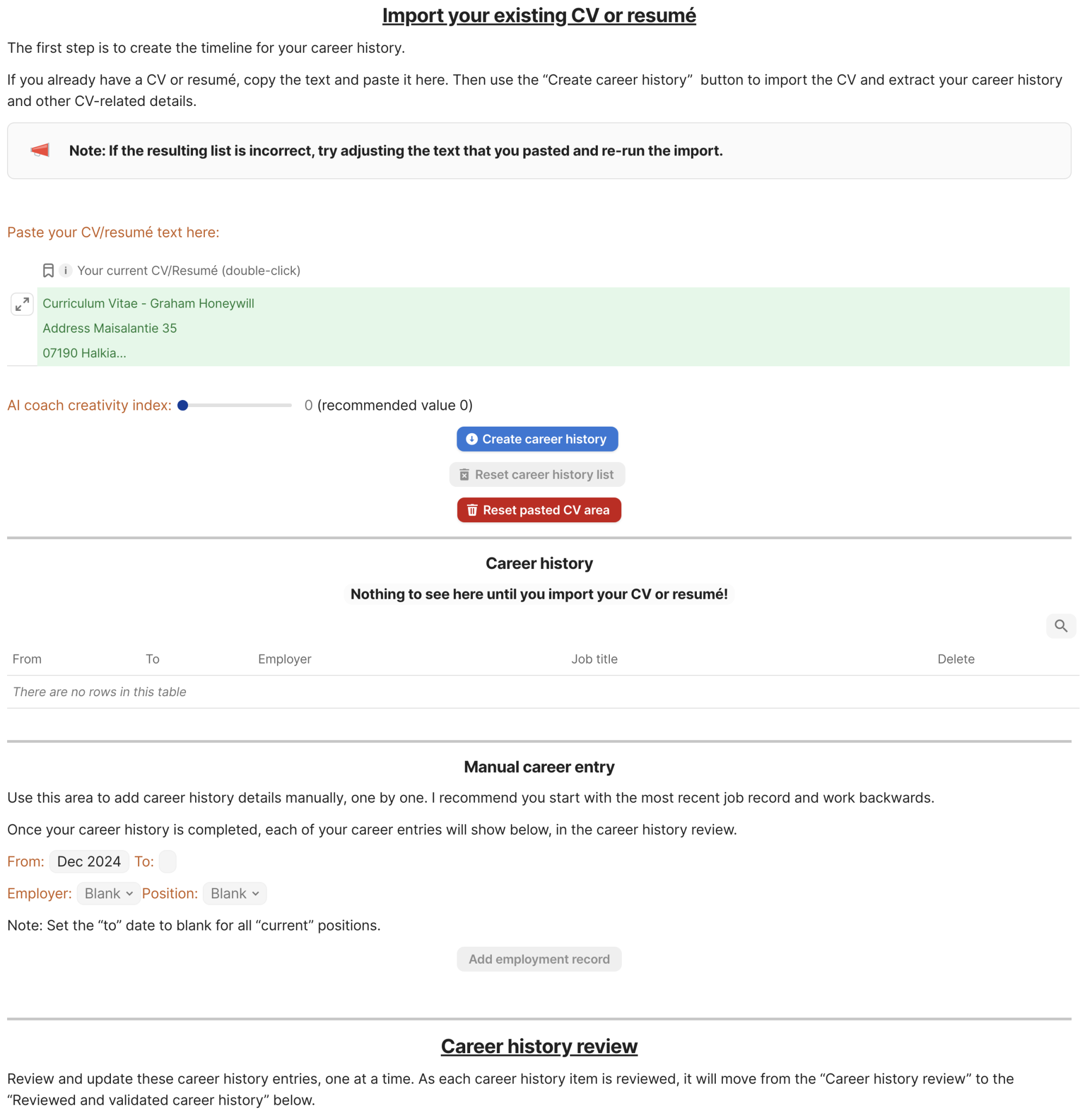
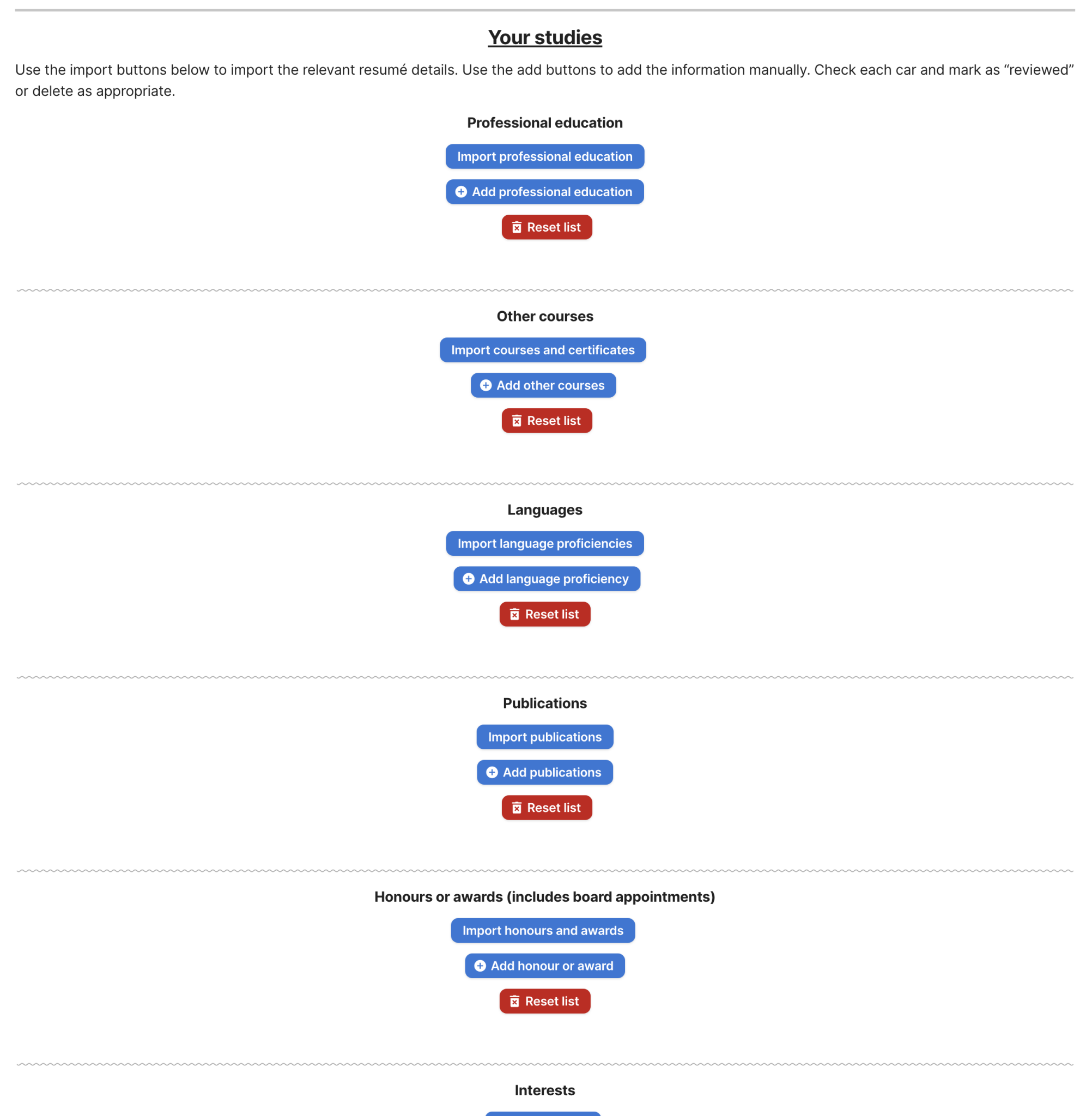
In today’s competitive job market, crafting a compelling resume is more critical than ever. The advent of Artificial Intelligence (AI) has revolutionised this process, offering tools and resources that enhance resume quality and effectiveness.
This exercise is a great example of how AI can support job seekers in creating impactful resumes, referencing both LinkedIn and the seminal job-hunting guide “What Color Is Your Parachute?” by Richard N. Bolles.
A resume serves as the first impression a potential employer has of a candidate. It must be concise, well-organised, and tailored to the job for which one is applying. According to Richard N. Bolles’ “What Color Is Your Parachute?” a resume is more than a mere list of job experiences and education. It is a strategic document that communicates an individual’s skills, achievements, and professional value.

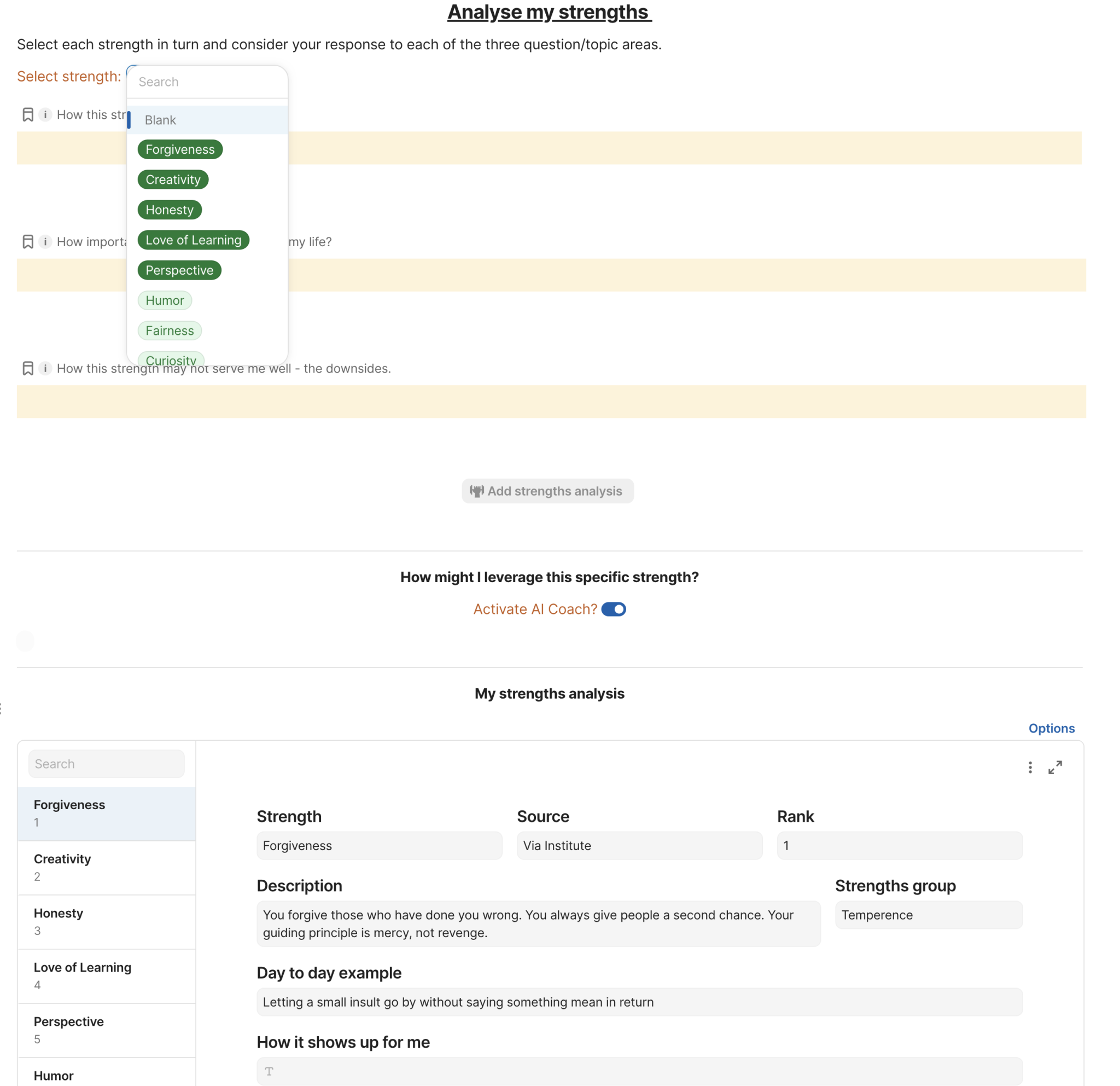
Your core strengths represent a core part of who you are.
We live in a world full of abundance and choice and it seems we often end up living a life that somehow doesn’t fit who we truly are.
Knowing our core strengths gives us a framework to work through the limitless possibilities to start to find what we truly want, based on knowing who we truly are – our strengths and our values.

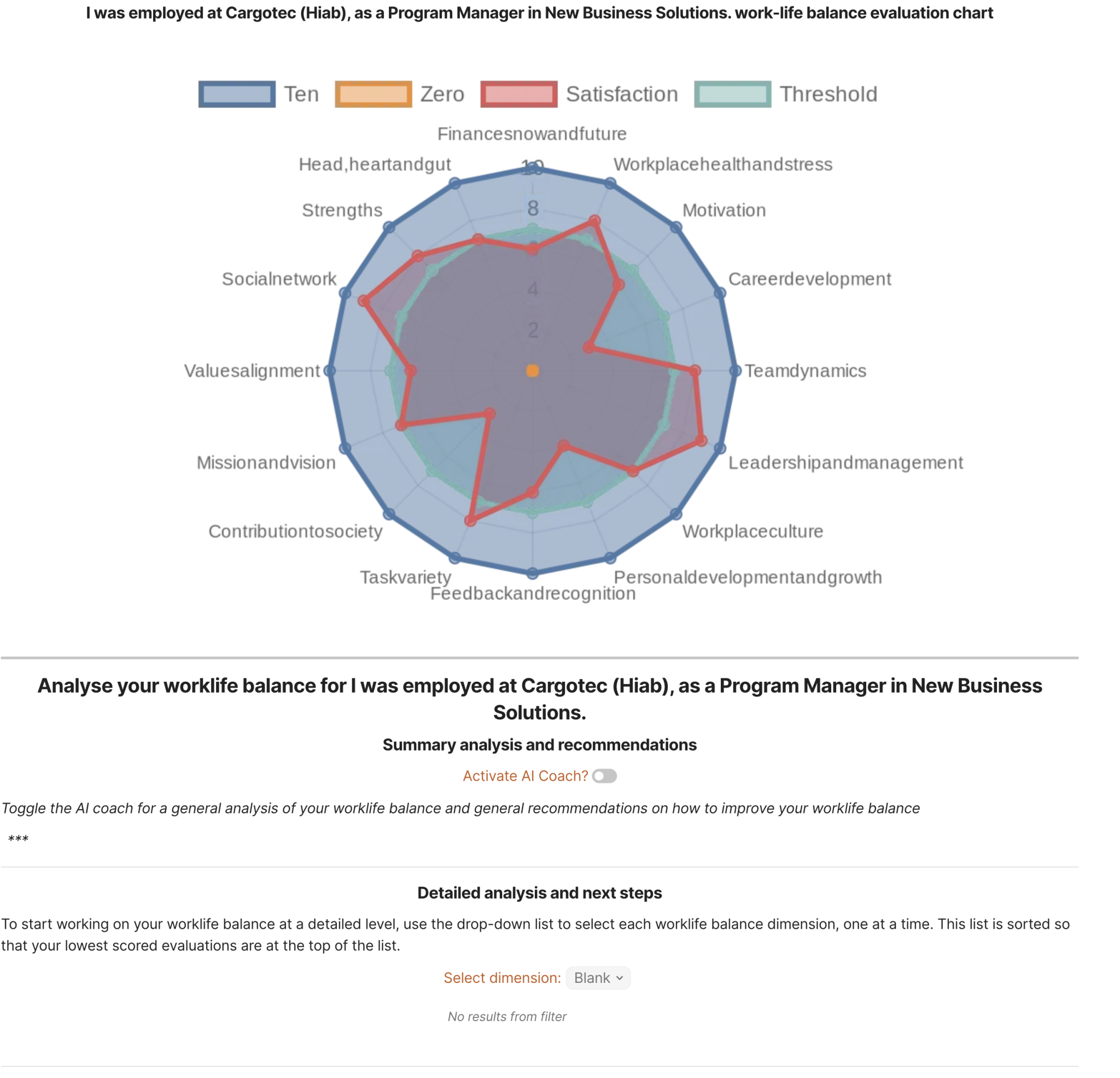
The Work-Life Balance exercise can help you create a holistic view of your work life.
In his book “Drive”, Daniel H. Pink describes Type X and Type I behaviours and associated drivers.
Type X people tend to focus mainly on extrinsic drivers, external rewards such as recognition and financial incentives, whereas Type I people tend to focus more on intrinsic rewards, autonomy, mastery and purpose.
He goes on to state that people who are mainly Type I focused will outperform Type X people in the long run.
You can use this exercise to assess your current or past employment experience along 13 dimensions of business life. This allows you to:
• Consider what changes you would like to make in your work-life to align better with your personal life.
• Consider the job characteristics you would desire from future roles.
• Consider the work-life culture you would like to build within your new start-up business.

When you are in flow, you are working on something that you love that combines your skill with challenge (high skill plus high challenge=a state of flow).
This state of flow was first described by Mihaly Csikszentmihalyi as “being completely involved in an activity for its own sake. The ego falls away. Time flies. Every action, movement, and thought follows inevitably from the previous one, like playing jazz. Your whole being is involved, and you’re using your skills to the utmost.”
This “Flow Diary” is one way to validate your core strengths, skills and values and start to see when you’re using these strengths and skills.
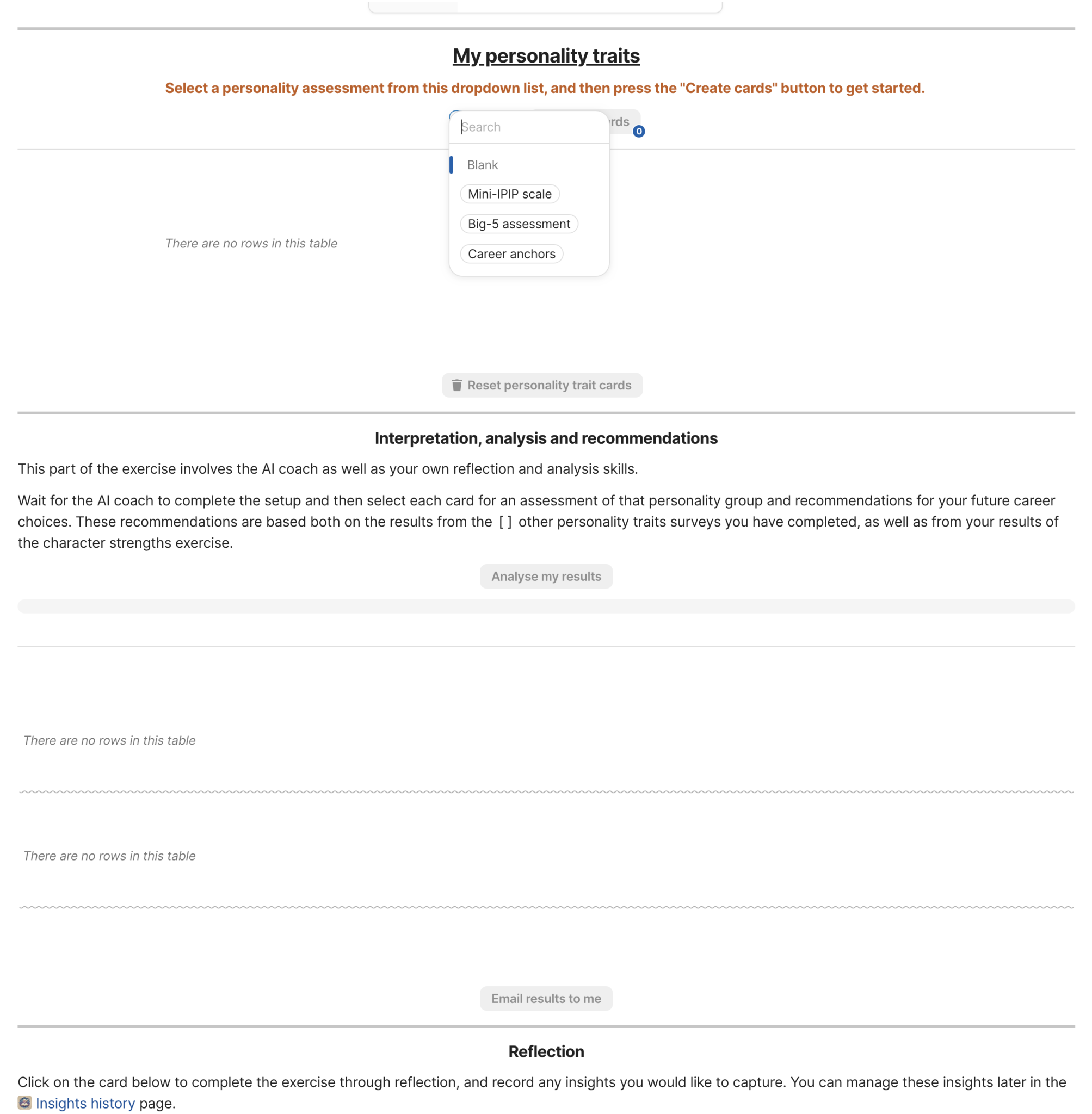
This exercise provides an opportunity for you be able to understand your personality, at a macro level, and then to consider how your personality has impacted on your past career choices.
Armed with this knowledge, you may be able to gain an objective understanding of your past successes and failures so you can leverage this understanding as you move forward.
You might be wondering why a life coach has an exercise focused on the past – isn’t that the domain of Psychologists? And you’re right, but not completely. If you think about it, you are the sum of your past.
Your past experiences have helped shape your strengths, helped you define your values. They have also created your beliefs – your beliefs about the world and your place in the world.
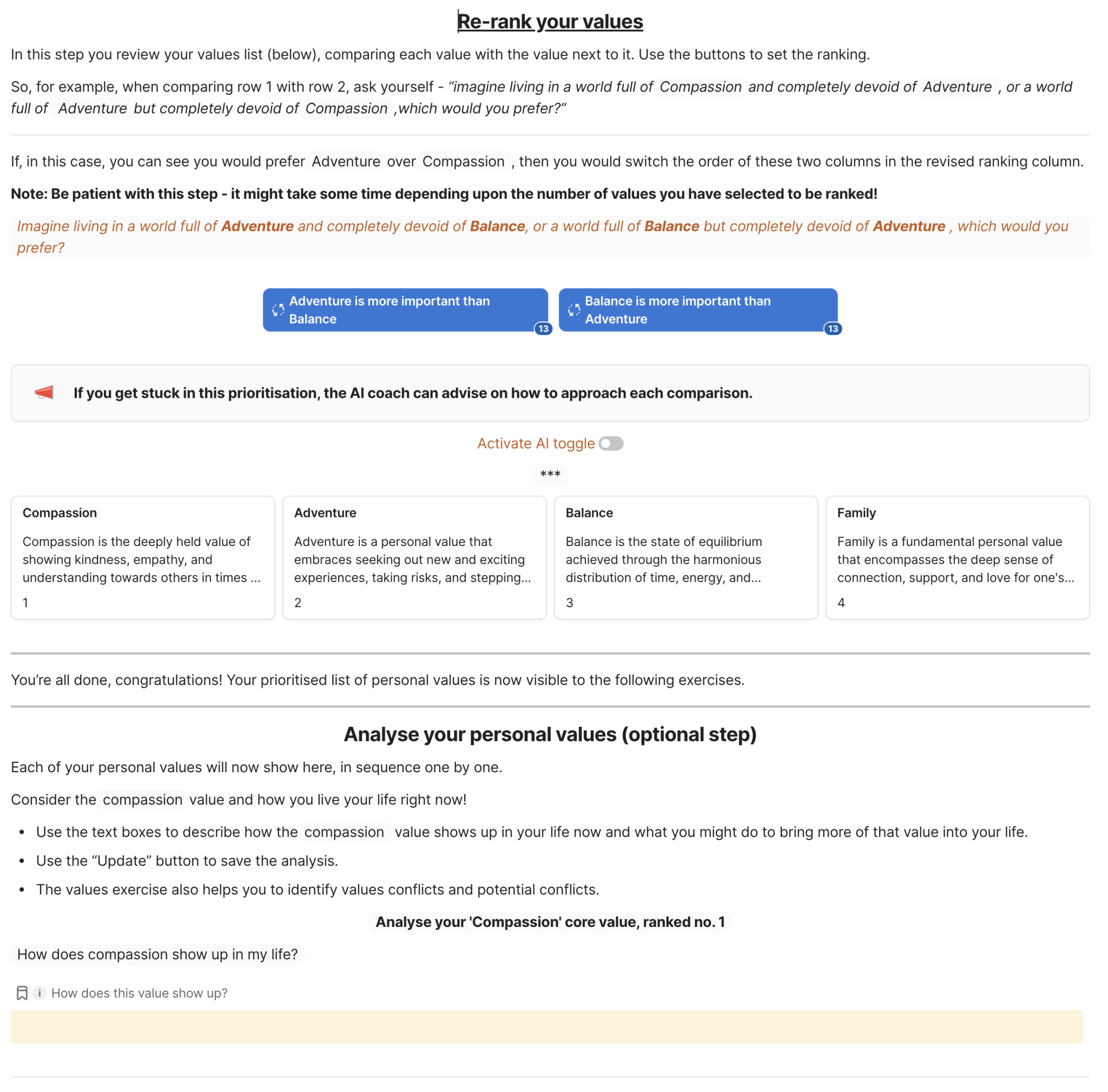
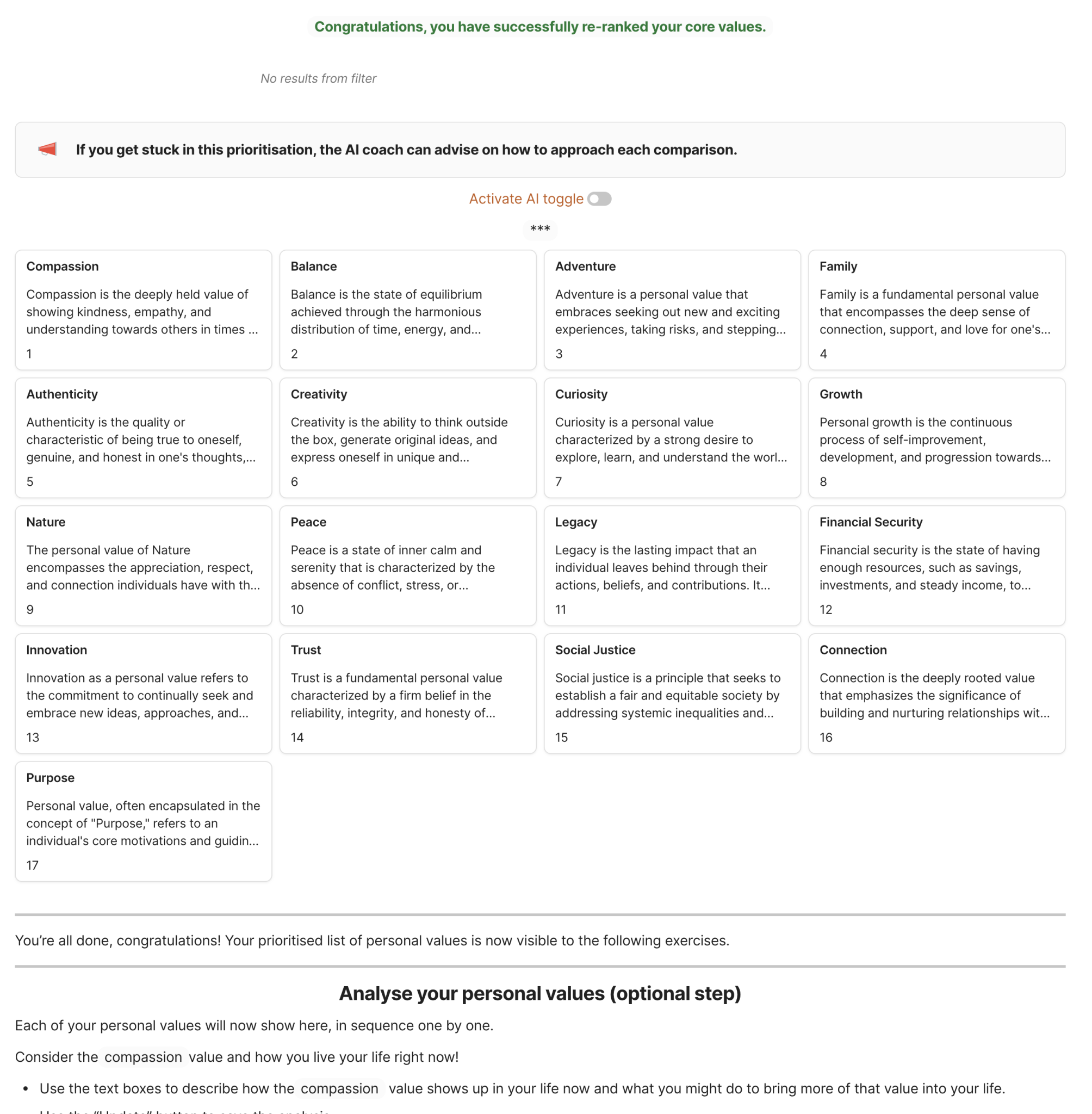
The purpose of this exercise is to help you use your past experiences as a valuable source to understand your core values. But don’t worry, this isn’t psychology, it’s just you, taking the time to reflect on the formative moments of your past, so you can record those experiences and identify the life values that made each experience significant for you. Once you have those values, from this as well as from other exercises, we will work with them together to help you identify and then prioritise your core values, the top 10-15 values that represent how you would like to live your life.
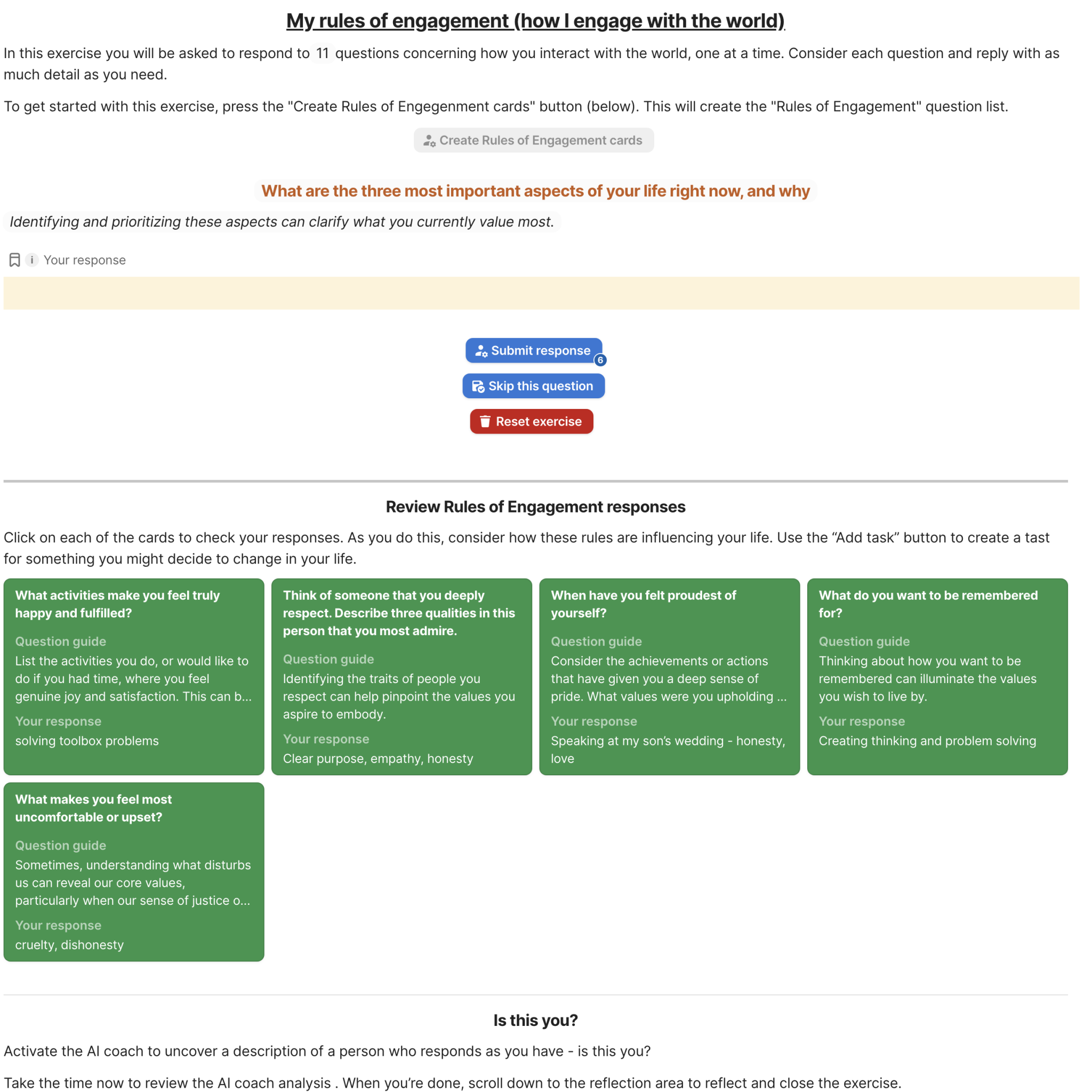
Whereas the “My Formative Past” and “Purposeful Future” exercises focus on the values that you held dear to you in your past life and that drive your possible future life, this exercise is designed to help you focus on the values that you hold right now!
The “My Rules of Engagement” exercise is a self-reflective activity aimed at identifying the values guiding one’s current life, based on the work of Professor David Clutterbuck. It involves answering eleven thought-provoking questions about one’s values, qualities admired in others, personal alignment with organizational values, and responses to hypothetical life scenarios. By dedicating 30 minutes to answer these questions and selecting corresponding life values, participants can gain insight into what drives their present actions and decisions. The exercise involves creating response cards and analyzing each rule to identify underlying life values, with a progress-tracking feature that changes the color of the cards. 
The power of this exercise lies in the way you are invited to consider the future in a world of abundance where anything is possible.
By contemplating your future life beyond the shackles that you impose on yourself, you create possibilities from which you can derive your purpose in life, your contribution to society and your core values. If you need help considering what abundance might mean for your life, I recommend visiting the Singularity Hub or reading the book “The future is faster than you think” by Peter Diamandis and Steven Kotler. You will find links to both these resources in the exercise itself.
When you are ready to start, start by relaxing and emptying your mind of any nagging thoughts so you can focus on the present moment, this exercise. You might want to consider the 4-7-8 breathing exercise or any other simple mindfulness or meditation exercise of your choice.
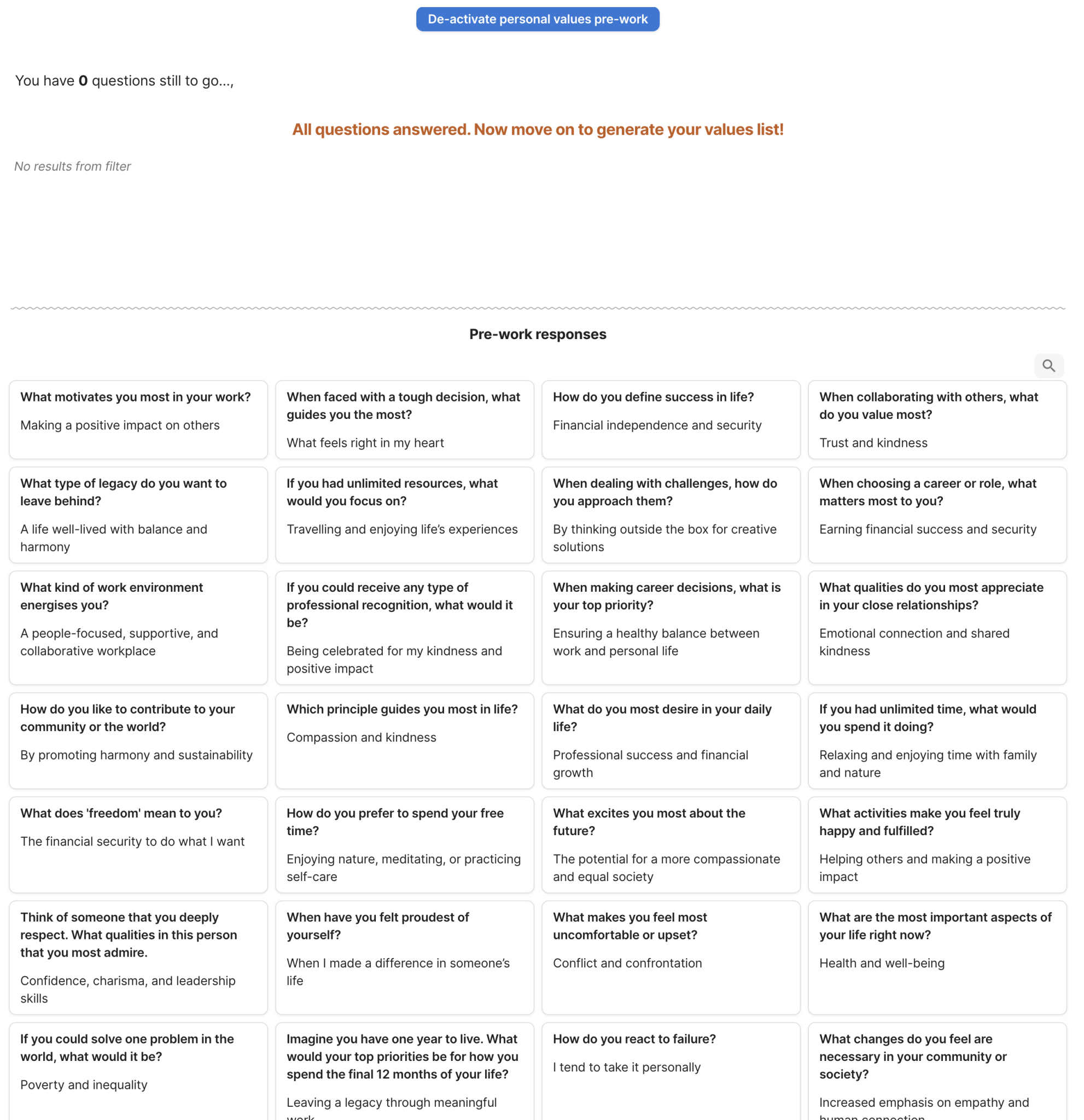
Finding your personal values may be an essential guide to living a life of purpose – doing what you love (what you value).
Values are a part of us. They highlight what we stand for. They can represent our unique, individual essence and act as the primary driving force behind our actions and behaviours that provides us with a set of ‘rules’ to live by, alongside a personal code of conduct.
Much like the core values that a company will have, our personal core values are there to guide behaviour and choice. Taking time to understand our core values will help us to become quick, focused, and effective decision-makers, with clear direction. If we don’t take the time to establish what our core values actually are, we’ll consistently find ourselves wondering how we get into such a mess. 
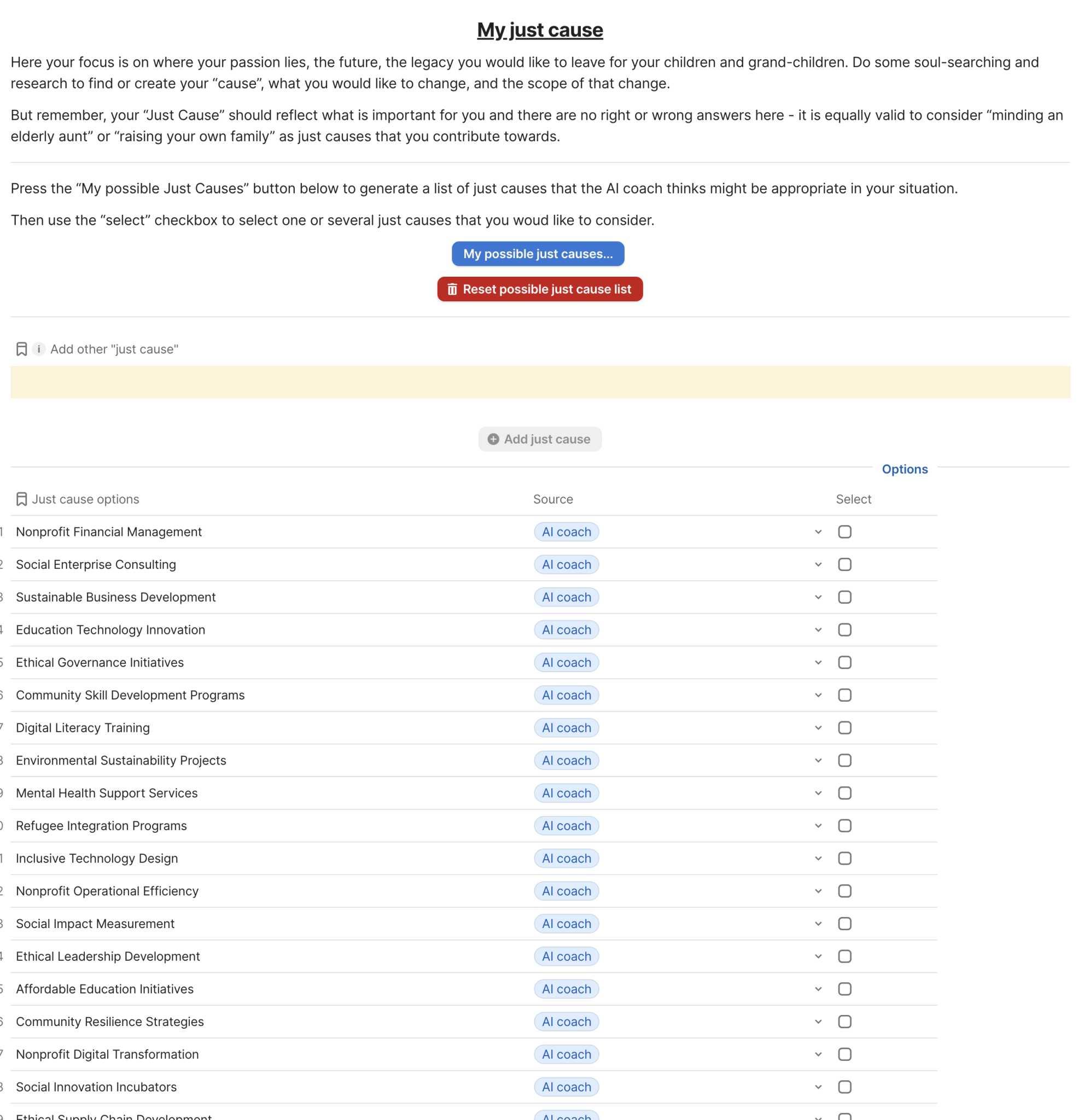
It isn’t easy knowing what legacy you want to leave behind – how you would like to contribute to the world, your “just cause”?
This exercise helps you work through this question by breaking it into three parts:
Scope – what is “your world”? is it family, local community, or is it a global sustainability topic? Cause – what is the cause you would like to support? Contribution – how can you bring your skills, strengths and resources to bear to give positive impact on the cause?
The Life Purpose navigator is designed to help you consider your life purpose as the culmination of the careers section of the toolbox.
If you’ve got this far you probably have documented and reflected on your strengths, skills, values, contribution and life balance. This exercise will help you consider these together to help guide your towards your Life Purpose.
There four elements map directly to five of the exercises in the careers section of the toolbox: —What you love – your values; What you’re good at – your strengths and your skills; What the world needs – your contribution to society; Earning a living – your life in balance

Ready to explore who you are — and where you want to go next?

Scroll to Top