Career Path Project
From insight to action.
The Career Path Project pillar transforms self-discovery into real-world momentum. After exploring who you are, clarifying what you want, and identifying promising career directions, this section helps you begin building your next chapter in a structured, strategic and confident way. Whether you’re seeking employment, growing your network, strengthening your skills, or preparing for a pivot into entrepreneurship, these exercises help you plan, prioritise and act with purpose.
While the earlier pillars help you understand yourself and explore possibilities, this section is about moving forward — making decisions, building opportunities, and taking deliberate steps toward a career that aligns with your values, strengths and aspirations.
The exercises in this pillar help you:
Strengthen your adaptability and resilience as you navigate career transitions
Build and activate your professional network
Refresh and articulate your personal brand
Engage in meaningful professional conversations (Power Chats)
Identify and close skill gaps
Plan and execute a structured, personalised career project
This pillar is the action engine of your toolbox.
It gives you the tools, strategies and clarity you need to move from exploration to execution.
Ready to explore who you are — and where you want to go next?
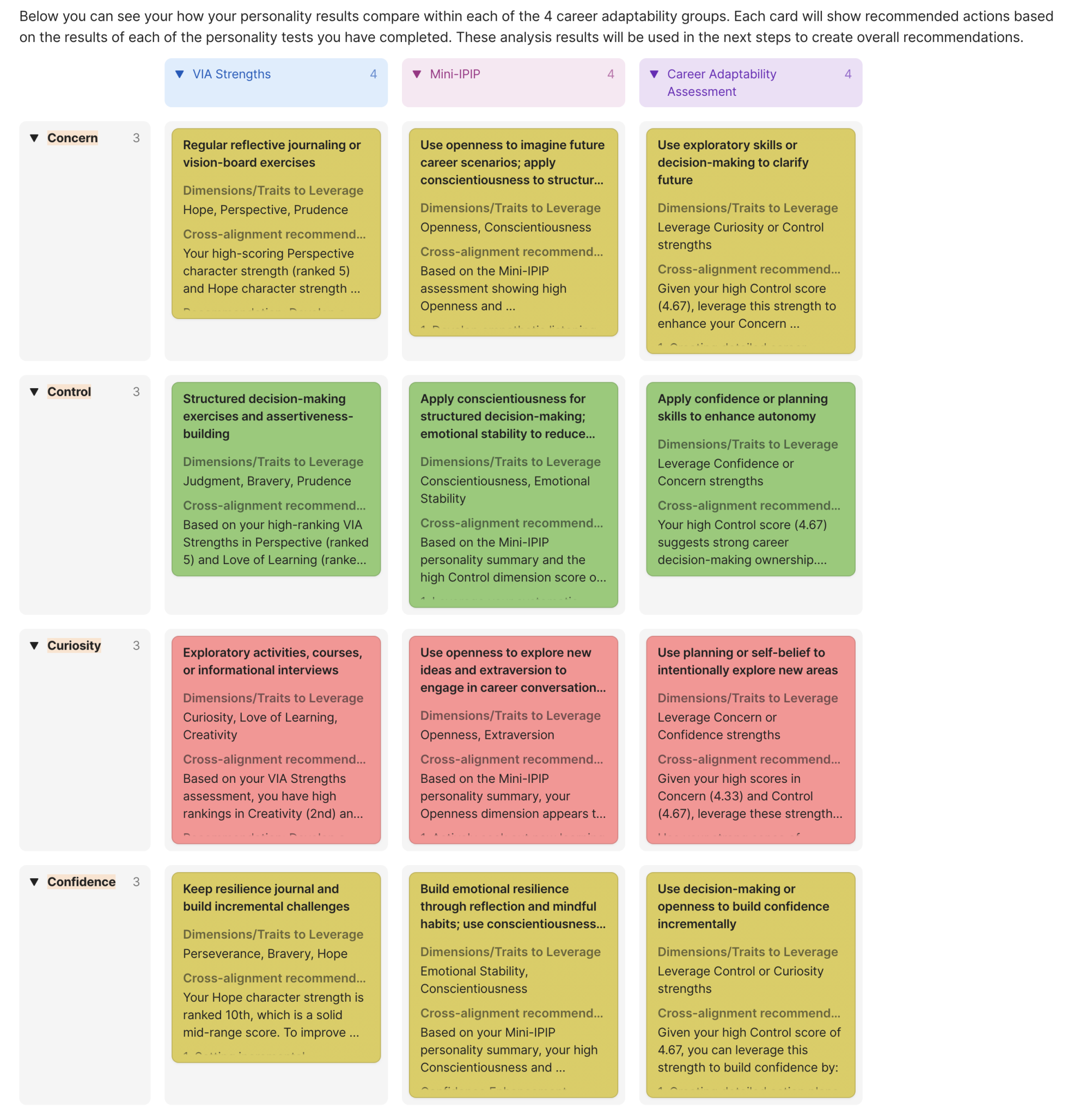
Career Transition Resilience Plan
This Career transition resilience exercise is designed to help you develop any gaps identified in that exercise by analysing your Career Adaptability scores alongside your character strengths and career anchor test results as well as your other Expanded Profile components.



Harvest Your Contacts and Connections
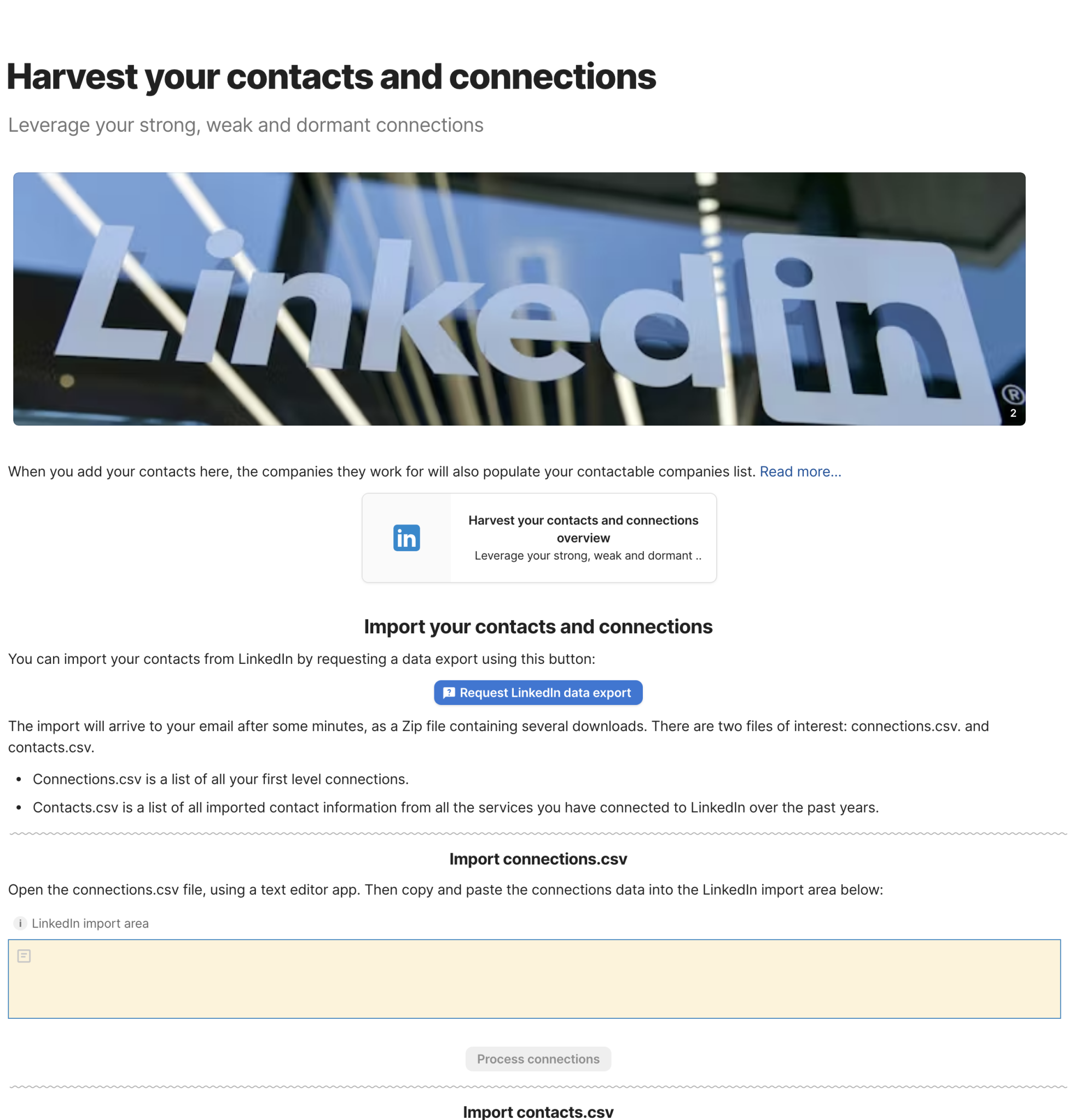
When you import your LinkedIn connections and contacts, you create a complete map of your professional network — from trusted collaborators to people you’ve only met once. This map is more than a directory; it’s a strategic tool for identifying opportunities and planning conversations.
In networking, your connections can usually be grouped into three categories:
Strong Links – People you interact with regularly and know you well. They are great for quick support, referrals, and targeted introductions.
Weak Links – People you know but engage with infrequently. Research shows these are often the most valuable for uncovering new opportunities because they move in different circles, giving you access to fresh perspectives and insider information.
Dormant Links – People you once knew well but haven’t spoken to for a long time. Rekindling these relationships can feel surprisingly natural and can quickly re-open channels of trust and opportunity.
In this exercise, you will:
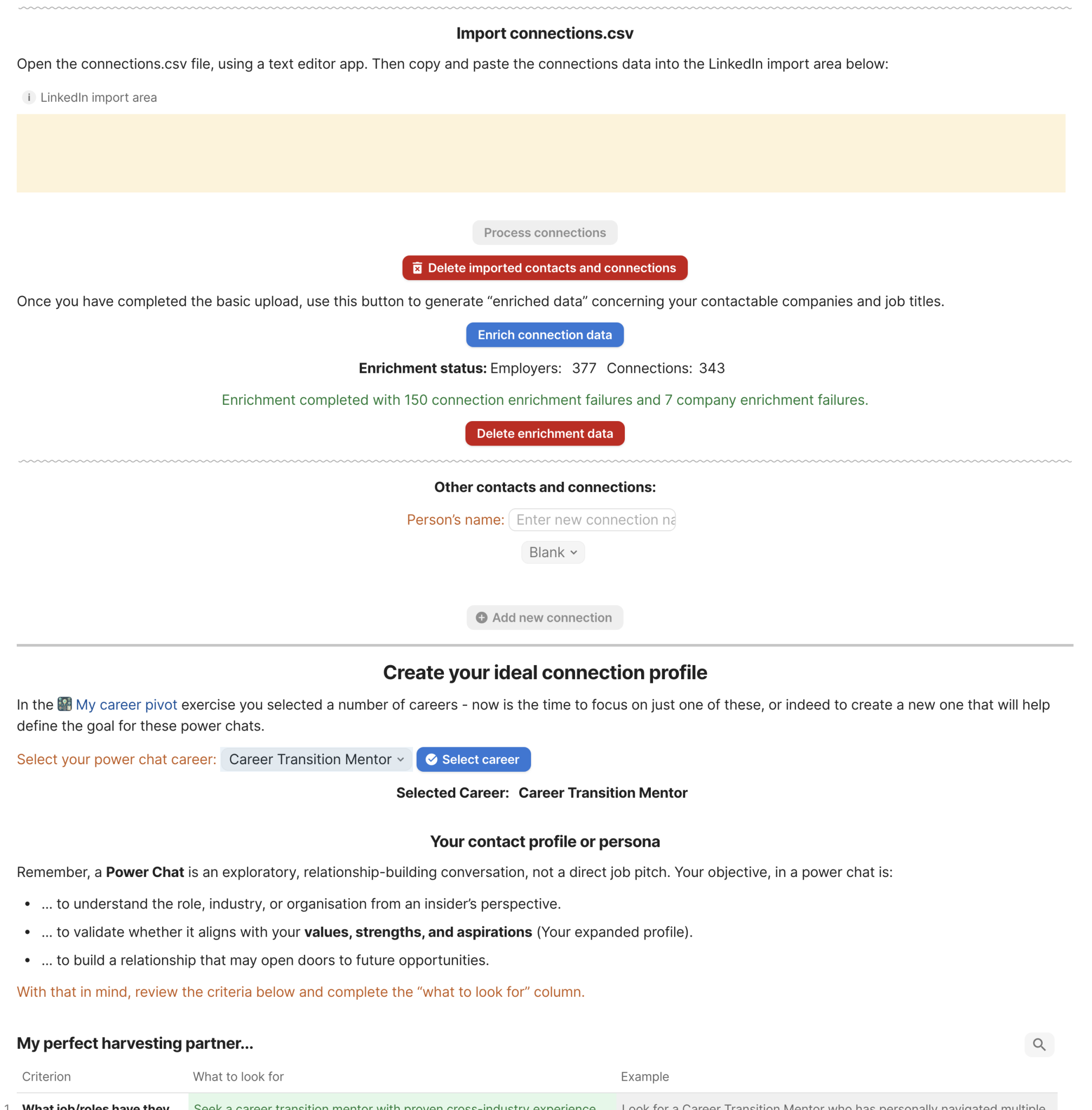
Import your LinkedIn data — including Connections.csv (your 1st-level connections) and Contacts.csv (contact details collected over time).
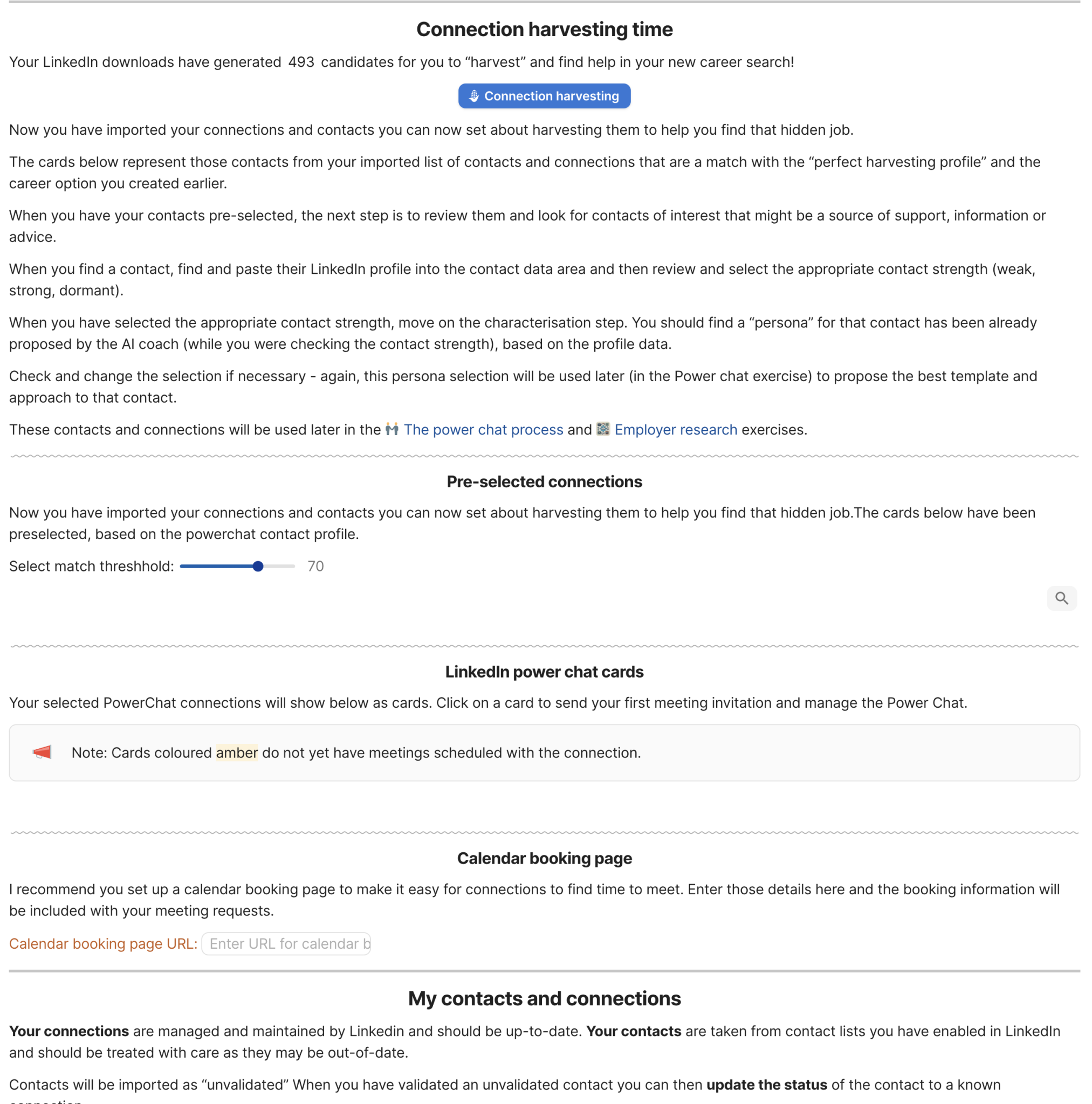
Classify each contact as strong, weak, or dormant.
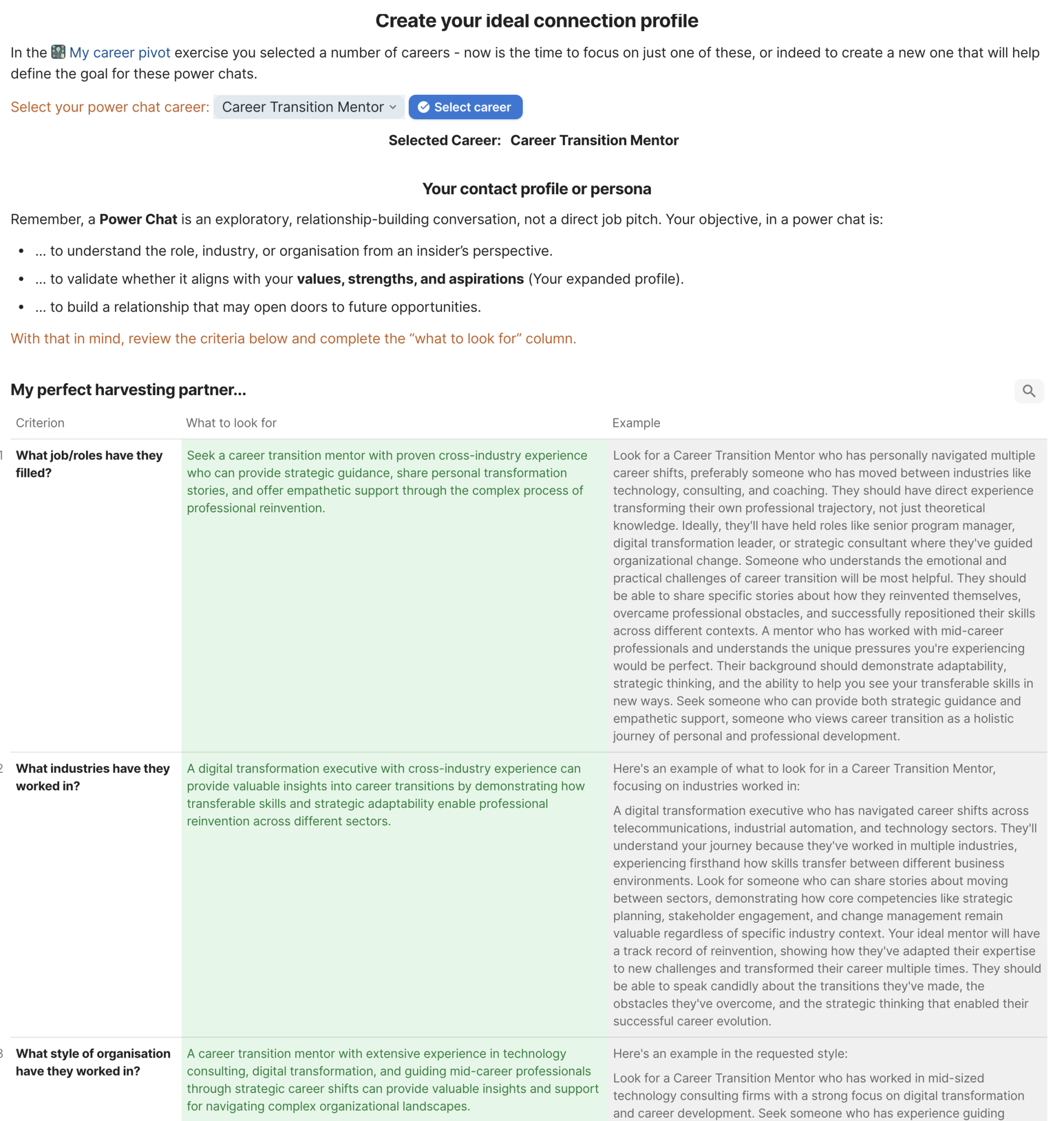
Filter and prioritise based on your career goals — targeting the people most likely to open doors in your chosen industry, role, or employer list.
Link directly to the Power Chat process — selecting contacts for meaningful, structured conversations that can advance your career thinking, expand your visibility, and uncover hidden opportunities.
The aim is not to contact everyone at once, but to be deliberate. Strong links can help you act on immediate goals, weak links can connect you to new opportunities, and dormant links can be revived to re-energise your network. Together, they form a balanced engagement strategy that feeds directly into successful Power Chats.



Create your Personal Brand
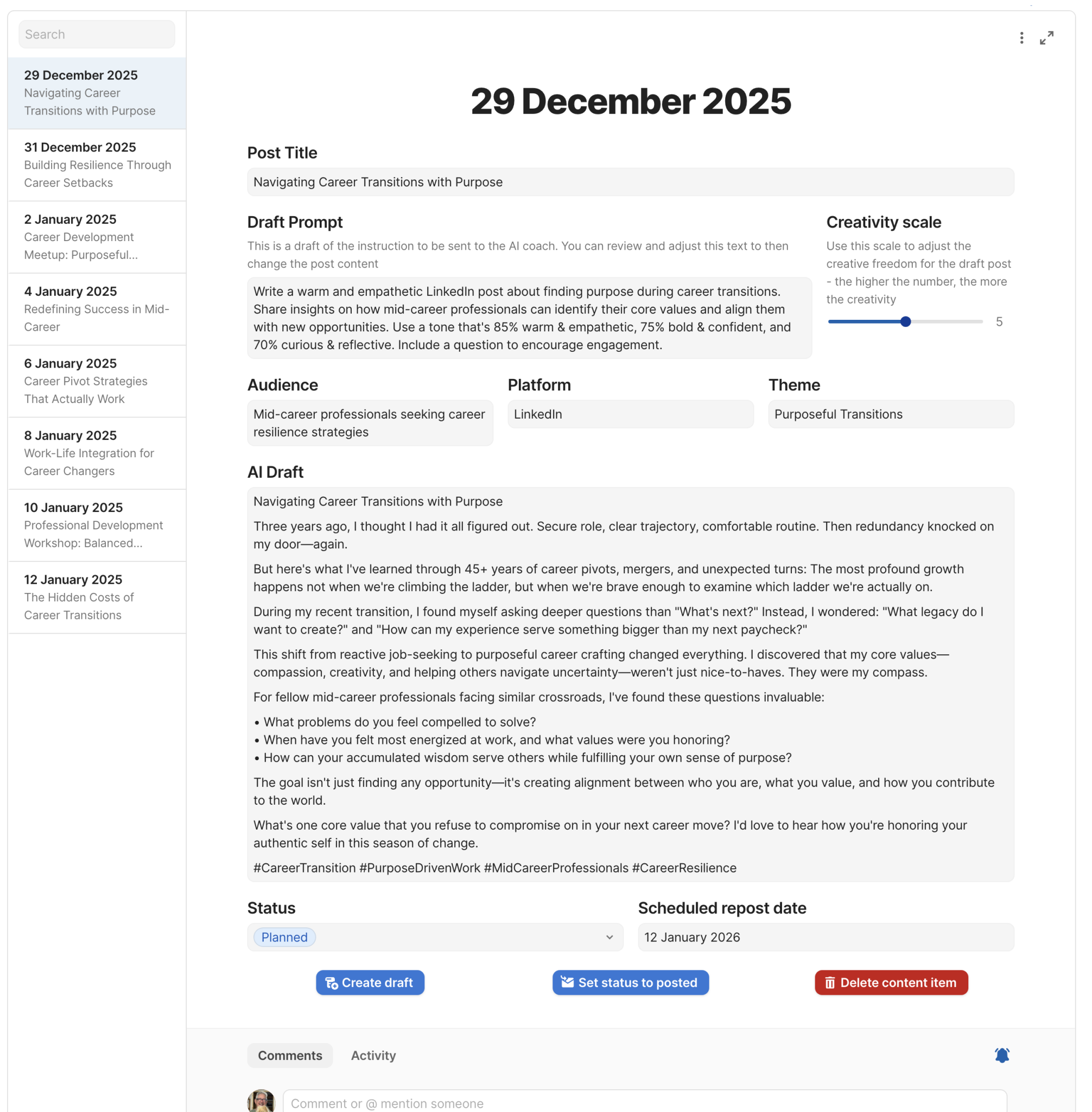
Welcome to your first step towards a refreshed and impactful personal brand. In today’s digital age, maintaining an up-to-date online profile is not just beneficial — it’s essential. Whether you’re seeking career opportunities, networking, or personal branding, your online persona speaks volumes before you even say a word.
What is a Personal Brand?
Your personal brand is how others perceive you based on the values you live by, the strengths you consistently demonstrate, and the way you communicate your professional story. It’s the unique impression you leave — online and offline — shaped by what you share, how you show up, and what you stand for. Building a strong personal brand helps you attract the right opportunities, build credibility, and connect with people who align with your goals and values.
According to Richard Bolles (What Color Is Your Parachute 2021 edition), “Employers are constantly searching LinkedIn for potential candidates. Sometimes an employer will offer someone a job because they liked what Google turned up about them. Online evidence like the creativity or professionalism you demonstrate; expressing yourself extremely well; their overall impression of your personality; the wide range of interests you exhibit; and evidence that you get along well and communicate well with other people.”



The Power Chat process
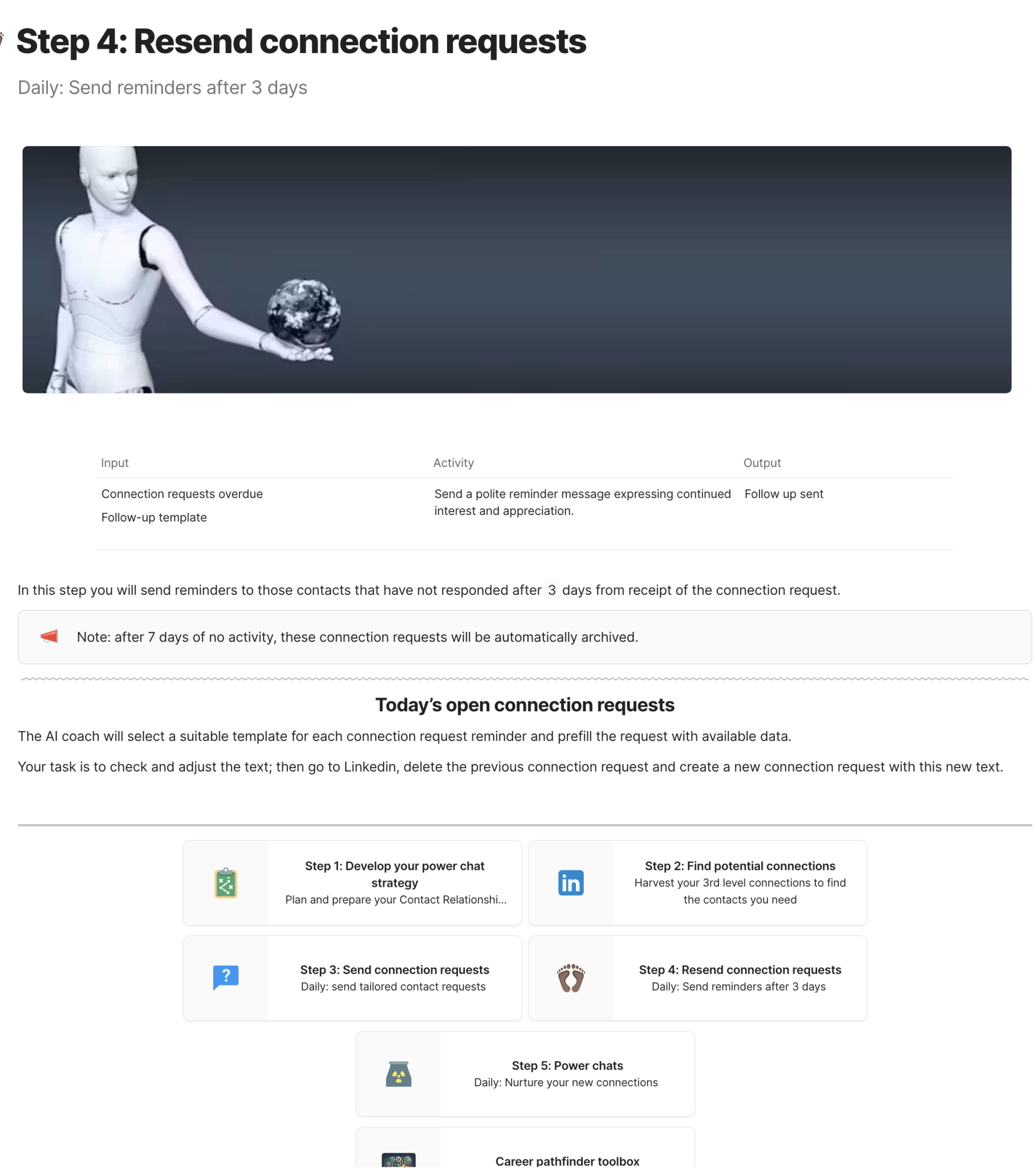
In today’s competitive job market, success often depends not just on your CV, but on the quality of your professional relationships. Developing and managing these relationships is therefore a crucial element of your job search strategy.
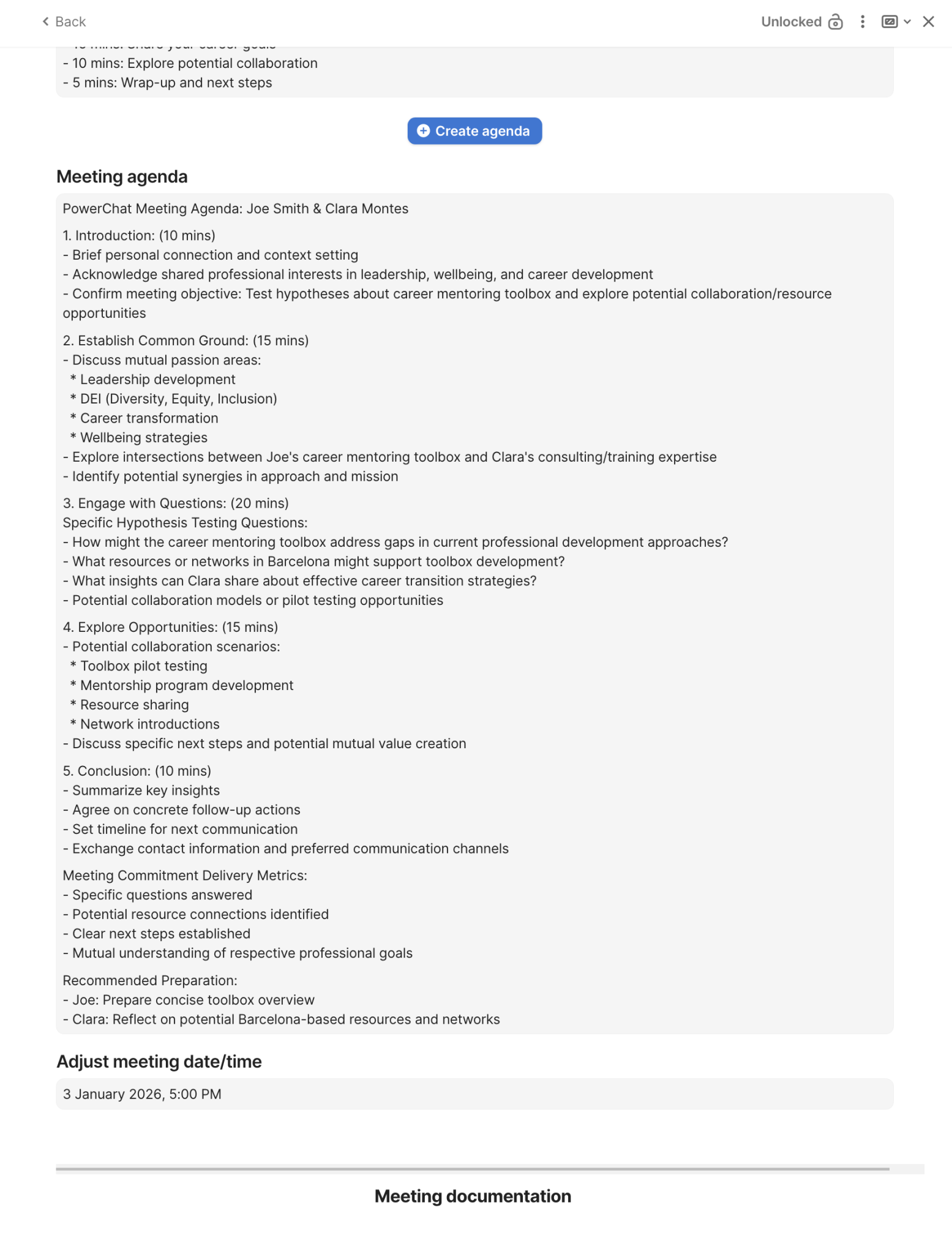
One of the most effective approaches is to reach out to individuals on LinkedIn who are already working in the type of role you’re targeting. By arranging a phone call — sometimes referred to as an ‘informational interview’ or a ‘power chat’ — you can gain valuable insights into the position, company culture, and industry trends. If the conversation goes well, you may even discover opportunities to be referred for a position — a method shown to significantly increase your chances of success. According to Jobvite’s 2021 Job Seeker Nation Report, referred candidates are 15 times more likely to be hired than those who apply through job boards alone.




Skills Audit
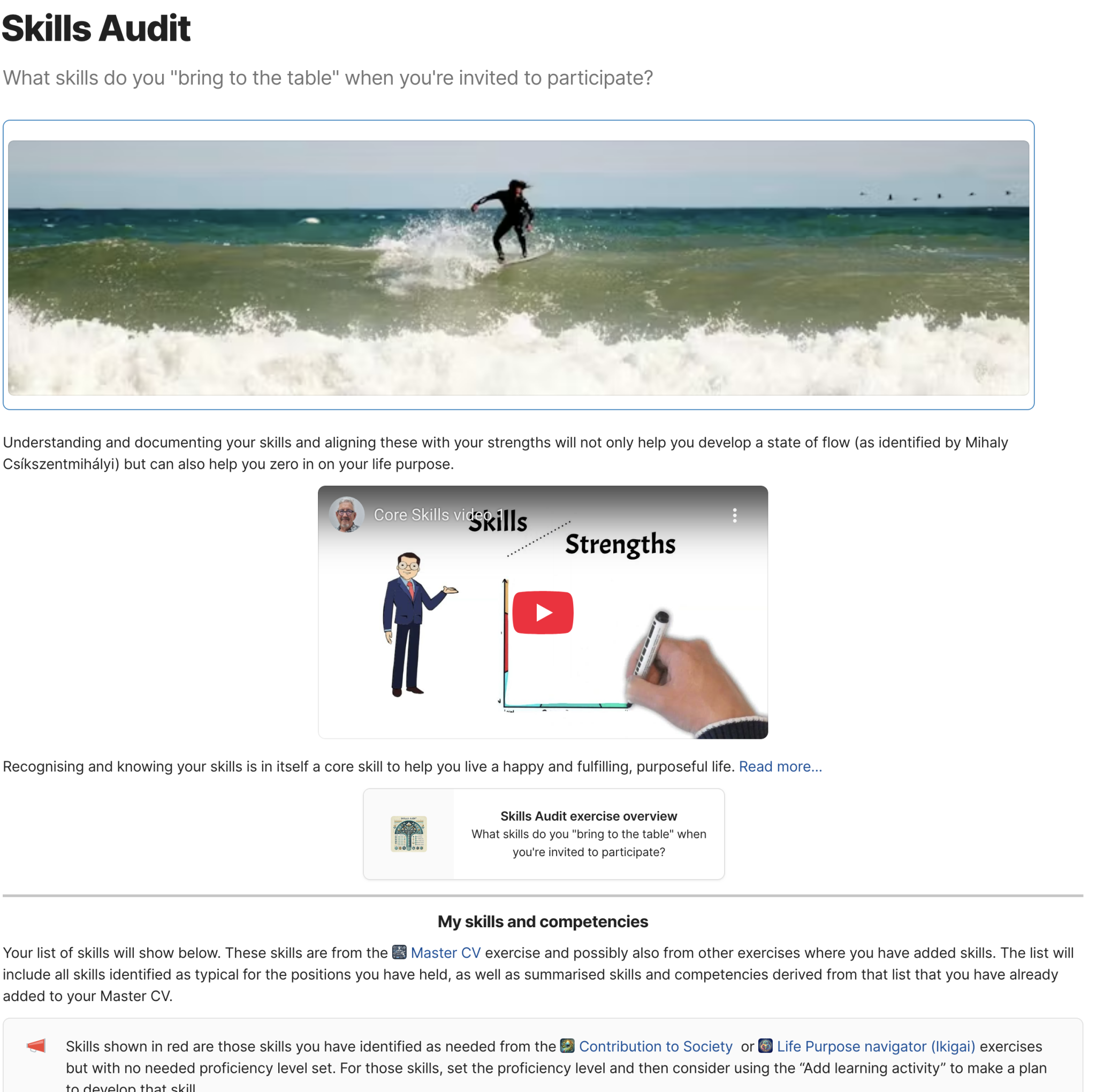
Within the context of career development, the goal of this exercise is to help you identify any skills you may need to develop further in order to achieve your next career goal. Why is this important? If you are currently unemployed, this creates a perfect opportunity for you to develop a new skill to add to your CV. You might enrole in an online or face-to-face course, or do some voluntary work, but given that you may be unemployed for some months, this is an opportunity for you to develop yourself.


Career Path Project
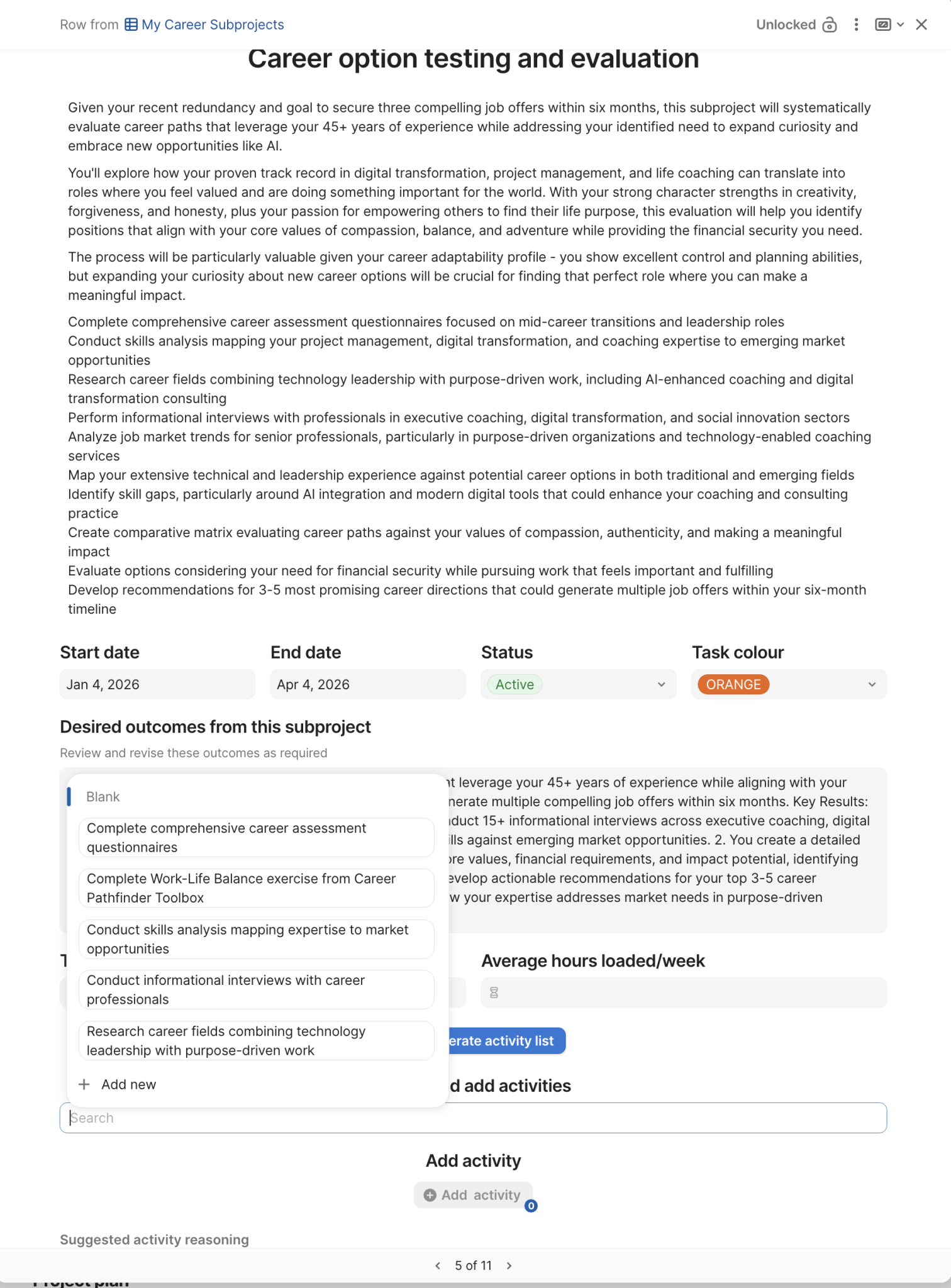
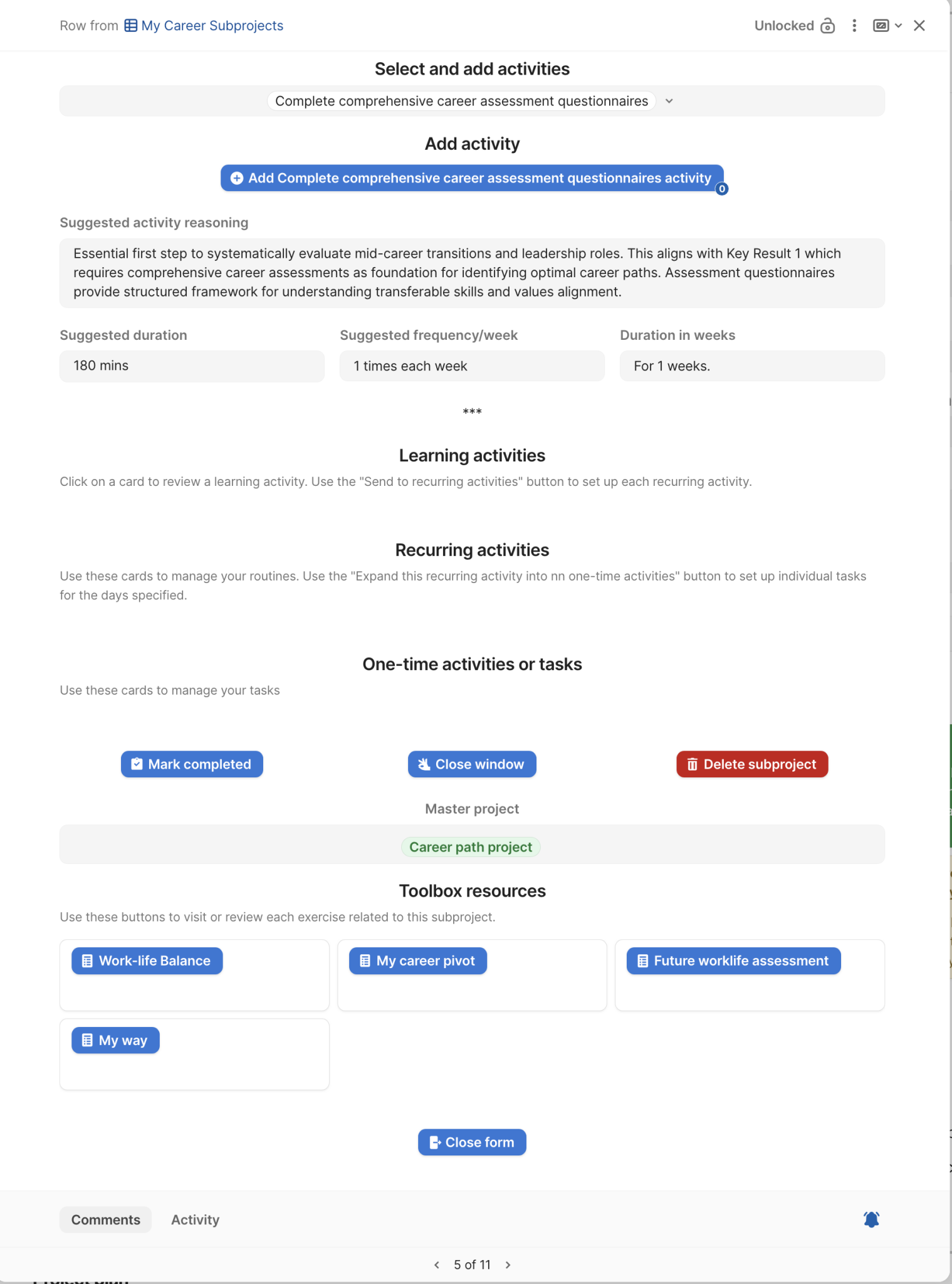
The Career Path Project exercise is action-focused companion to your self-discovery journey through the Career Pathfinder Toolbox. While the Pathfinder helps you uncover your values, strengths, aspirations, and possibilities, this project helps you translate insight into momentum.
Whether you’re actively job seeking, exploring new career directions, starting a side hustle, or building a back-door path into new work, this project is your space to make things happen.


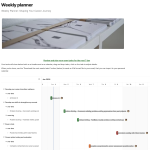
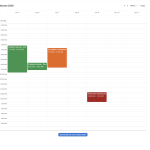
Weekly Planner
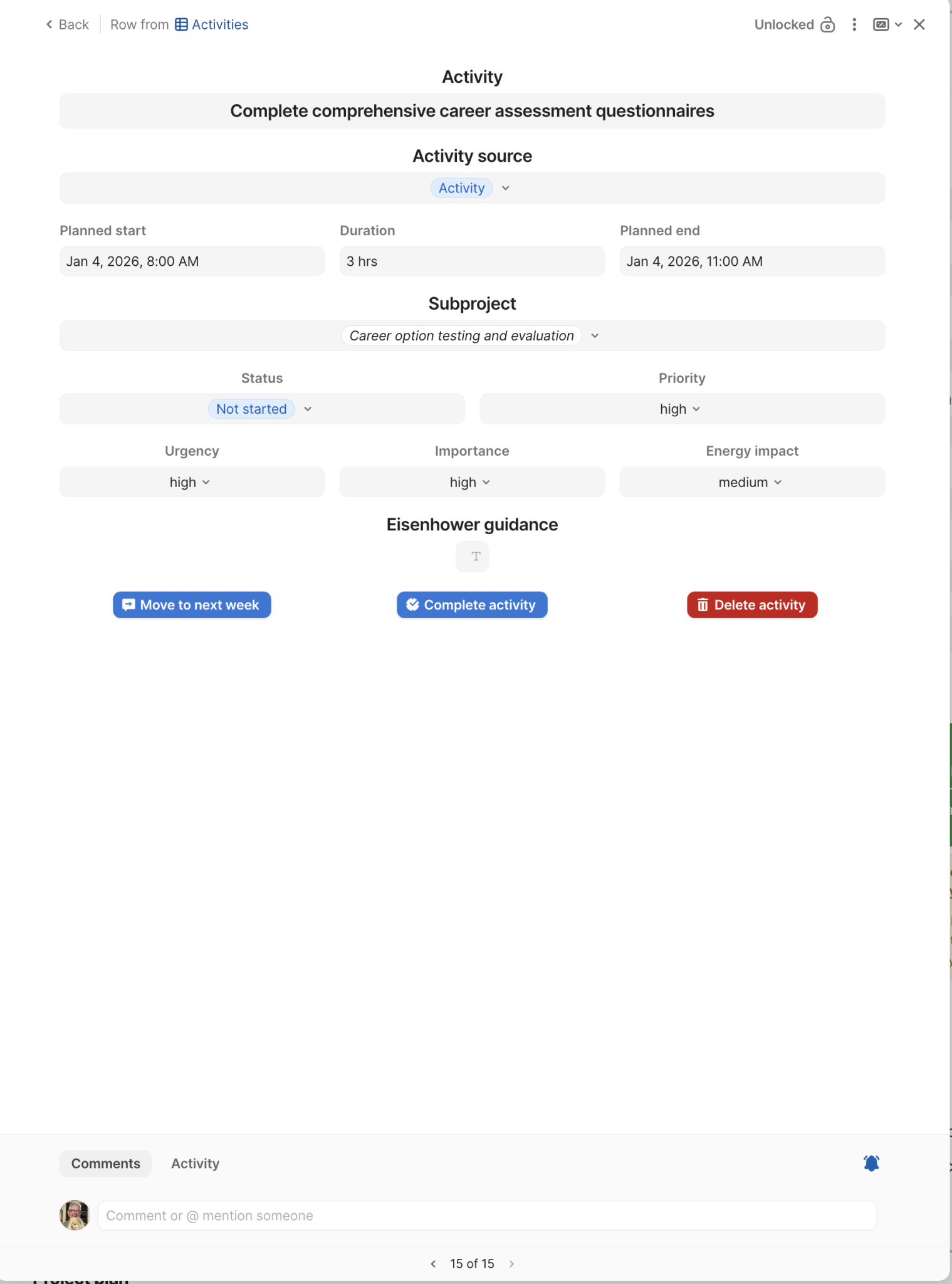
- Review Carried-Over Tasks – Identify any tasks that have automatically shifted into the new week. Decide whether to keep them in your active plan, reschedule them for a later stage, or remove them if they’re no longer relevant.
- Adjust and Confirm Scheduled Tasks – Revisit the activities you originally scheduled for this week. Are they still appropriate given your current priorities and available time? Adjust, postpone, or break them down into smaller, more manageable steps if needed.
- Plan New Activities for the Week – Based on your overall project goals and any new insights, decide if there are additional activities you’d like to introduce for the week ahead. Select actions that will move you meaningfully closer to your career objectives, while keeping your workload balanced and realistic.